Asset Management
Benefits of Asset Management Software: 10 Ways It Helps Your Business
· 8 min read
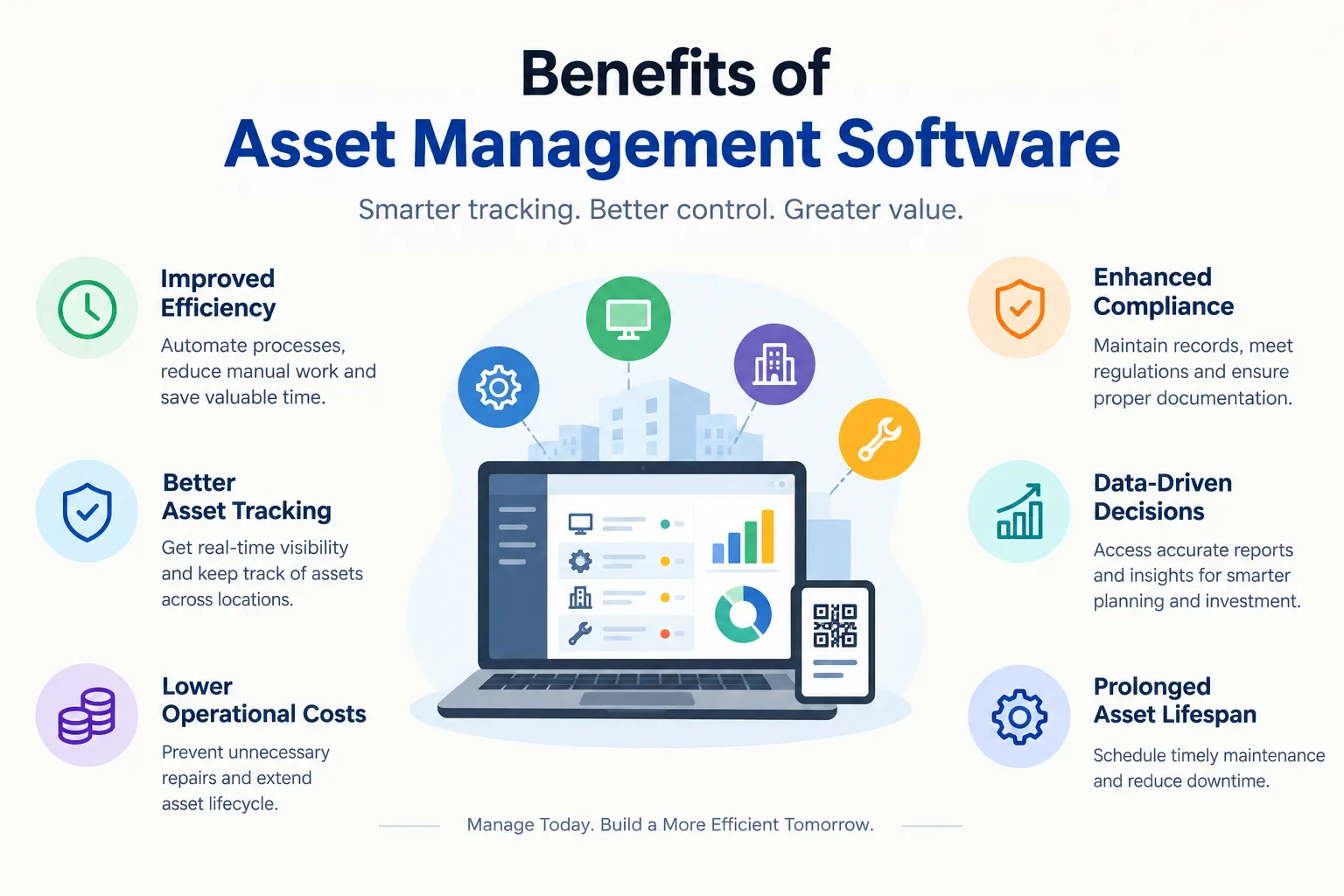
If you've been wondering what the real benefits of asset management software are, the short version is this: it replaces guesswork with a clear record of what you own, where it is, and what shape it's in. That sounds simple, but anyone who has spent an afternoon hunting for a missing tool or a warranty certificate knows how much time it saves. This guide walks through ten practical advantages in plain language. We'll also look at how to measure the results and what trips teams up along the way.
A quick note on where this comes from. We looked at what the top-ranking articles cover, from time and cost savings to compliance, spare parts, and scalability. Then we filled the gaps with practical examples, so you're not left with a list of buzzwords. Firmity is our own product, so we've kept this guide focused on the benefits themselves and given Firmity only a short mention near the end.
What Is Asset Management Software?
Let's get the basics out of the way quickly. Asset management software gives you one central record for every physical asset you own, covering things like its location, status, service history, and lifecycle details. Instead of spreadsheets, paper registers, and somebody's memory, everything lives in one place that the whole team can check. So your team has one place to check before anyone starts asking around.
It's used by facility teams, operations, IT, and finance—basically anyone who looks after things that cost money and need upkeep. The more assets and locations you have, the more it helps. A small team with fifteen laptops can get by with a spreadsheet for a while, but a plant with hundreds of machines usually can't.
The 10 Key Benefits of Asset Management Software
1. It Saves Time and Money
This is the benefit nearly every article leads with, and for good reason. When asset details sit in one system, nobody burns hours searching through files or calling around to find out where something is. Audits get quicker because the records are already there. Repairs and replacements also get planned rather than rushed, and rushed spending is almost always the expensive kind. Small savings in each of those areas add up over a year.
2. You Get Clear Visibility of Every Asset
Here's a simple test: can you say right now how many assets you own and where each one is? If that question makes you hesitate, visibility is your biggest opportunity. Software gives you a single view of everything, filtered by location, category, or status. You stop relying on whoever has been around longest to remember where things are. That clarity makes almost every other decision easier.
3. Fewer Lost, Misplaced, or Duplicate Assets
Assets wander off, especially in shared spaces and across multiple sites. A good system records transfers and keeps a movement history, so you can see who moved what and when. Some tools use QR codes on each asset, so a quick scan pulls up its full record. That cuts down on the quiet losses that nobody notices until an audit. It also stops you buying a second item when the first one is sitting in another building.
4. Maintenance Gets Smarter
Without a system, you usually find out something is due for service when it breaks. With one, last service dates and next service dates are tracked, and overdue items get flagged. That's the difference between planned upkeep on your schedule and an emergency on somebody else's. Equipment lasts longer when it's looked after on time. You also spend less on urgent repairs, which tend to cost more than planned ones.
5. Spare Parts and Inventory Are Easier to Control
Spare parts are one of the quiet headaches of asset-heavy teams. Too few, and a breakdown drags on while you wait for a part. Too many, and money sits on a shelf. When parts are linked to the assets that use them, you can see what you actually need. That means fewer panic orders and fewer forgotten boxes in a storeroom.
Want to See What This Looks Like for Your Own Assets?
Here's a quick pause, because reading about benefits is one thing and seeing them is another. If your asset records are spread across spreadsheets and folders, a short walkthrough can show you how a single record per asset changes day-to-day work. Firmity's team can show you around using your own kind of assets, whether that's plant equipment, campus infrastructure, or estate facilities. Tell them what you're tracking today, and they'll reply within 24 hours.
Talk to the Firmity team and book a walkthrough
6. Audits and Compliance Become Easier
Auditors want proof, and proof is much easier to produce when records are tidy. Software keeps service history, issues, and movement logs attached to each asset. Warranty and AMC expiry dates can be tracked with reminders instead of sitting in an email somewhere. When someone asks for a history, you pull it up rather than piecing it together. That calm, ready-to-go feeling during an audit is a benefit people don't expect until they've had it.
7. Better Decisions About Repairing or Replacing
At some stage, keeping an asset running starts costing more than swapping it out. Without records, that call is a gut feeling. With a history of repairs, downtime, and running costs, you can see the pattern and decide with numbers in front of you. It also helps you plan budgets earlier, since you know which assets are nearing the end of their useful life. That makes replacement a plan instead of a surprise.
8. Access From Anywhere
Cloud-based systems let your team check asset details from the office, the site, or home. A technician standing in front of a machine can pull up its history on a phone. A manager at the head office can see what's happening across several locations. Everyone works from the same up-to-date information, which cuts down on the "which version of the spreadsheet is current?" problem.
9. Better Control Over Who Sees What
Not everyone needs access to everything. Role-based permissions let you decide who can view, edit, or approve different things. Finance may need asset values, while technicians need service history and locations. Keeping records in one controlled system is also safer than loose spreadsheets passed around by email. You get a cleaner trail of who changed what.
10. It Grows With Your Business
As you add assets, sites, or people, a spreadsheet gets slower and messier. Software is built to handle that growth without a total rebuild. You can add new locations, categories, and users as your needs change. That scalability means the system you set up today is still useful when your operation is twice the size.
If you want a reference point beyond vendors, ISO's asset management standard, ISO 55000, describes benefits of good asset management such as improved financial performance, better decision-making, and managed risk. Software doesn't deliver those on its own, but it gives you the records that make them achievable.
Who Benefits Most? A Quick Look by Team
Team | Main benefit | Everyday example |
|---|---|---|
Facilities | Planned maintenance and fewer breakdowns | Service-overdue assets get flagged before they fail. |
Operations | Clear location and status of equipment | A technician scans a QR code and sees the full history |
Finance | Better records for budgeting and audits | Asset values and warranty dates sit in one place |
IT | Control over devices and assignments | You know who has which device and when it's due for replacement. |
How to Measure the Benefits
It's easy to say software helps, but it's more convincing to show it. Pick a few simple numbers and note them before you start. Good ones include the time spent preparing for an audit, the number of unplanned breakdowns, how many assets you can't locate, and what you spend on urgent repairs. Check the same numbers again after a few months.
Don't expect everything to move at once. Early wins, like finding assets faster, tend to show up as soon as your records are in. Bigger ones, like fewer breakdowns, take longer because they depend on maintenance habits changing. Stick to a handful of numbers and check them on a regular schedule, so you’ve got a solid answer when someone asks if the software paid off
How Firmity Fits In
A quick, honest word about our own tool. Firmity's asset management software gives each asset a single record covering its category, location, status, value, and ownership type. Assets can carry a QR code that opens their record, service history, and linked spare parts. Service due dates, warranty and AMC expiry, and movement history are tracked against each asset, and maintenance tasks link back to the asset they relate to. It's built for facility teams in manufacturing, education, and residential estates
Common Pitfalls That Reduce the Benefits
The software itself is rarely the problem. Most disappointments come from the way it's introduced. Starting with messy data is the biggest one, because a system full of wrong records just gives you wrong answers faster. Another is having no clear owner, so updates slip and the records slowly drift from reality. And skipping training is a close third, since people go back to old habits if the new way feels confusing.
Making the Software Pay Off in Daily Work
Start by listing what you own and deciding what you want to fix first, whether that's missing assets, late maintenance, or messy audits. Begin with one site or one category instead of everything at once. Give someone clear responsibility for keeping records current, and show your team how it makes their own work easier. Review your numbers after a few months and adjust.
If you're still comparing tools, our roundup of the top asset management software in India is a handy next read. Whatever you shortlist, ask to try it with a small sample of your own assets first. A real test tells you far more than a feature list.
FAQs About Benefits of Asset Management Software
The biggest one is clarity. You know what you own, where it is and when it needs attention, which saves time, reduces surprise costs and makes audits easier.
That comes down to how many assets you manage and how often things go missing. If finding equipment or remembering service dates already takes effort, it's probably worth a look. If you only have a handful of items, a simple spreadsheet may be enough for now.
Some benefits, like finding assets faster, tend to show up once your records are loaded. Others, like fewer breakdowns, take longer because they depend on your maintenance habits changing.
Cloud-based tools make it easy to access records from anywhere and to add users or locations. On-premise setups give you more direct control over where the data lives. The right choice depends on your team's size, locations and IT resources.
Author Bio

Syed Aadam
Syed Aadam is a software engineer with a Bachelor's and Master's in Information Technology with a specialization in Artificial Intelligence and Machine Learning. Having trained, and assisted in training foundational ML models for solving frontier scientific problems at the intersection of biodiversity and technology, Syed Aadam has been working to develop AI-enabled CMMS, ERP and CAFM softwares at Ufirm Technologies.
Talk to our team
Questions about facility management software? Leave your details and we'll get back to you within 24 hours.
More on Asset Management
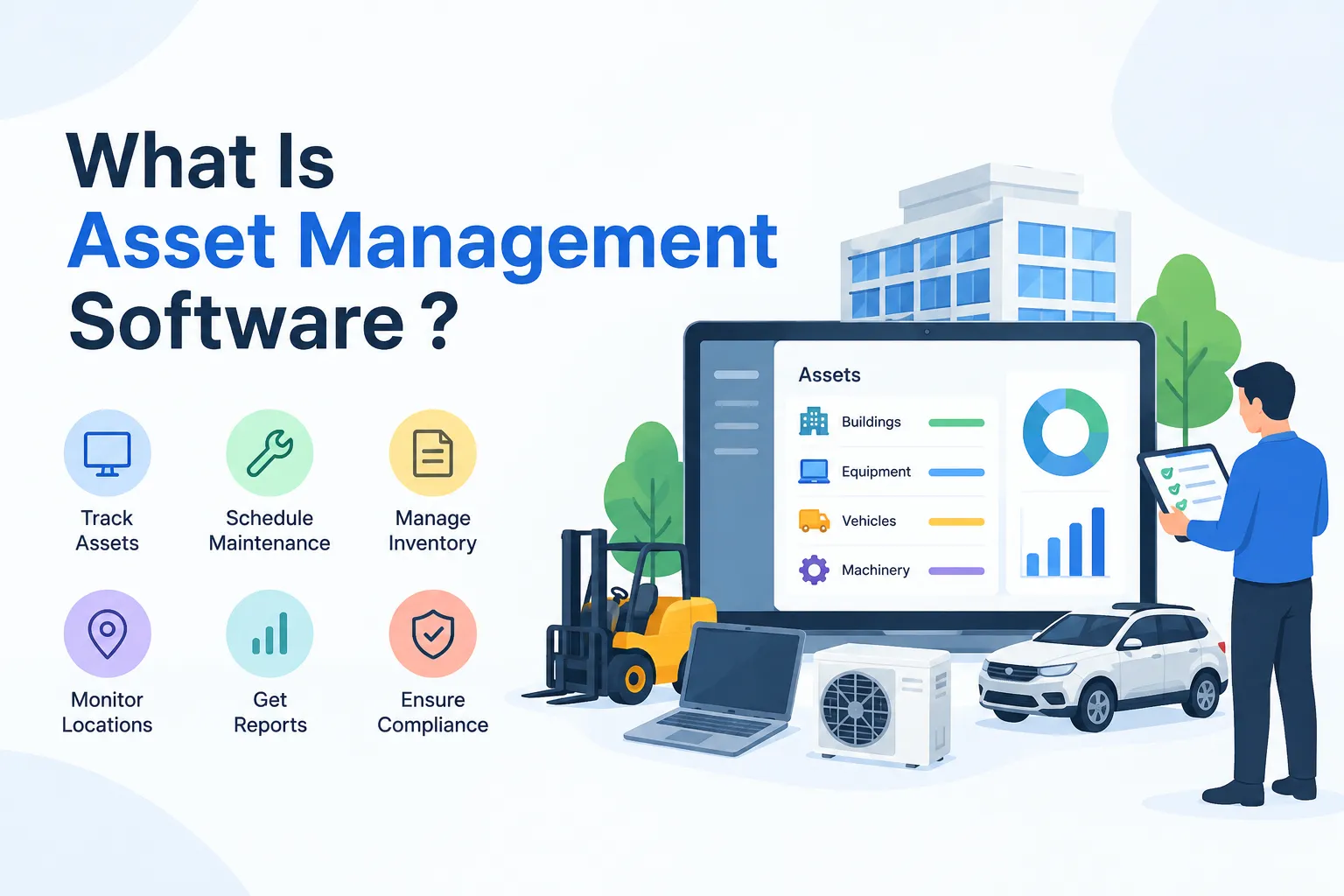
What Is Asset Management Software? A Simple Guide for Growing Teams
What is asset management software? Learn how it works, its key features, types and benefits, plus simple tips to choose the right one for your team.
Top 7 Asset Management Software in India
Asset management software India can help businesses keep track of physical assets, organize maintenance records, and know where equipment is located…