Inventory Management
11 Benefits of Inventory Management Software for Indian Businesses
· 8 min read
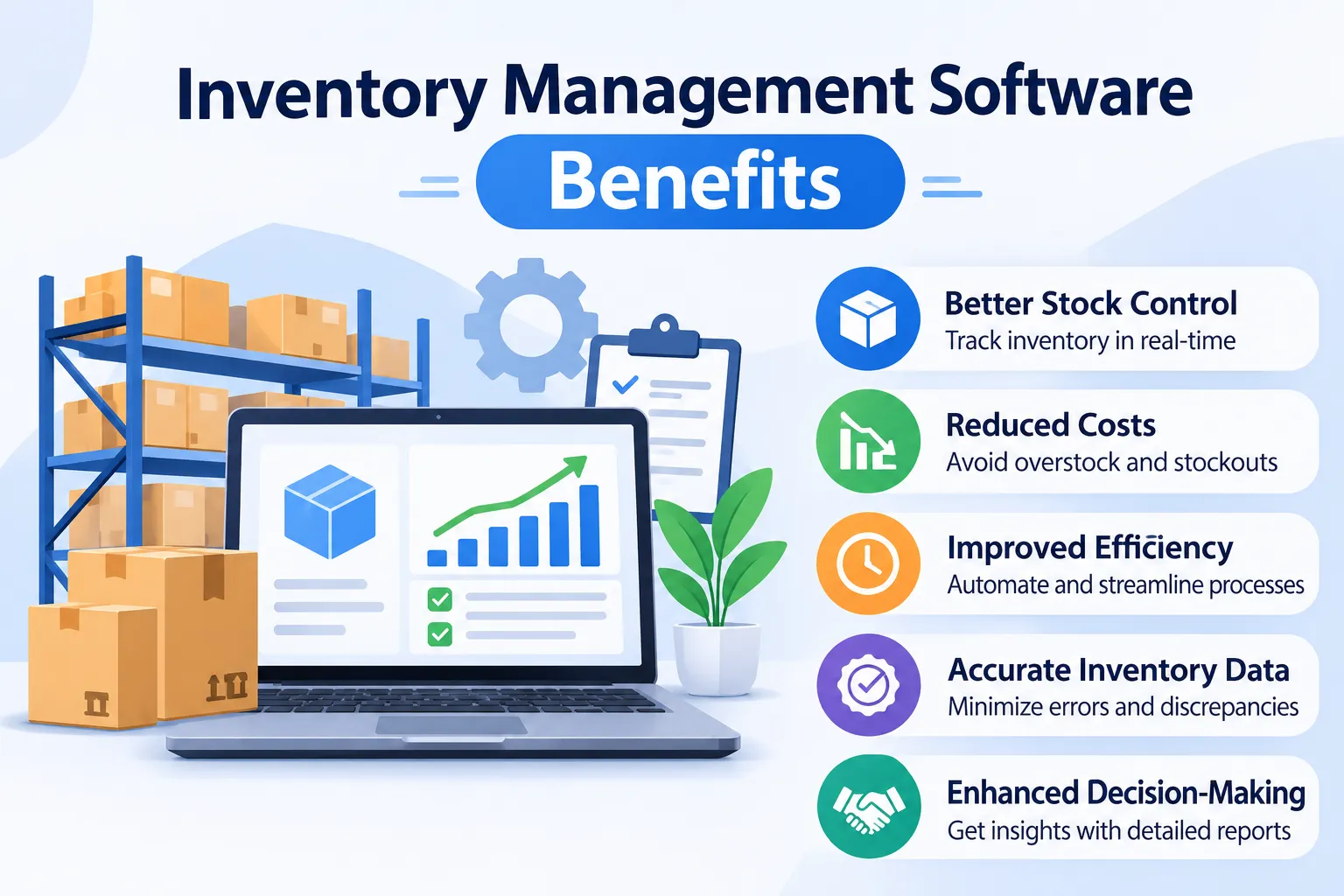
The main benefits of inventory management software are more accurate stock records, fewer stockouts, less overstock, faster counts, smarter purchasing, clearer audit trails and better decisions from reports. In short, you always know what you have, where it is and what to order next. That sounds simple, but anyone who has lost half a day hunting for a part knows how valuable it is. This guide walks through eleven benefits in plain language,
What Inventory Management Software Does
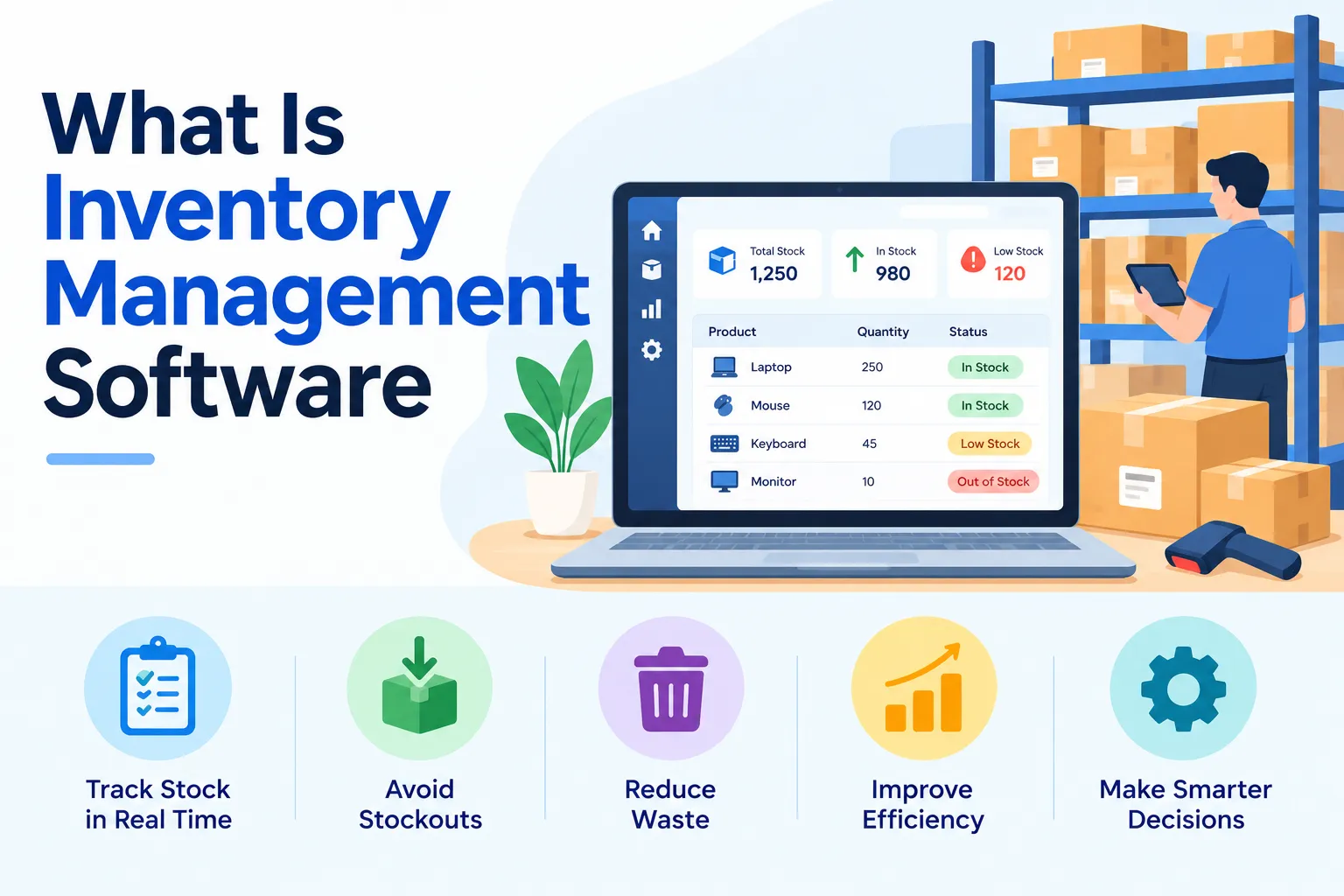
Before the benefits, a quick reminder of the job. Inventory management software records your stock and every movement of it, including receipts, issues and the running balance in between. It can be installed on your own computers or used online as a service. If you want the longer explanation, our guide on what is inventory management software covers it step by step. The rest of this post is about what you actually gain from it.
The 11 Benefits of Inventory Management Software
Here's the list. Each benefit gets a short explanation and a small, everyday example, so you can picture how it would show up in your own work.
1. Better Stock Accuracy
Stock accuracy is the foundation for everything else. When every receipt and issue is recorded as it happens, your records stay close to what's actually on the shelf. You stop relying on someone's memory or a spreadsheet that was last updated on Tuesday. Accurate records make every other decision easier, from reordering to audits.
Example: A storekeeper issues three bearings to a technician, and the balance drops immediately, so the next person sees the right number.
2. Fewer Stockouts
Stockouts happen when you run out of something you needed. With current stock levels in front of you, and reorder points set, you get a warning before a shelf empties. That gives you time to order calmly instead of paying for rush delivery. Fewer stockouts also mean fewer stalled jobs and unhappy customers.
Example: A reorder alert fires for a filter used on a key machine, so it's ordered a week before it would have run out.
3. Less Overstock and Tied-Up Cash
Buying too much is just as costly as buying too little, because money sits on shelves doing nothing. When you can see what you already hold, you stop reordering things you don't need. Over time, you learn what actually moves and what just gathers dust. That frees up cash for things that matter more.
Example: A team notices it holds a year's supply of an item it uses twice a year, and stops buying it.
4. Saves Time and Admin Effort
A lot of stock work is repetitive: counting, copying figures, chasing details. Software handles much of that automatically, from calculating balances to producing reports. Your team spends less time on paperwork and more on the work that needs a human. The saving shows up in small pieces every day.
Example: A monthly stock report that took half a day to assemble now takes a few clicks.
5. Fewer Manual Errors
Typing the same figure into several places is where mistakes creep in. Software enters data once and reuses it, so the same number appears everywhere. Scanning codes instead of typing reduces slips further. Fewer errors mean fewer awkward conversations about why the numbers don't match.
Example: A purchase order quantity flows straight into the goods receipt, so nobody retypes it.
6. Faster, Easier Stock Counts
Stock counts are nobody's favourite job. When your records are already close to reality, a count becomes a quick check instead of a major excavation. You can count in sections and reconcile differences with a clear note of what changed. The result is less downtime and more trust in the numbers afterwards.
Example: A team counts one storeroom each week and updates balances on the spot, instead of shutting down for a day.
Want to See These Benefits With Your Own Stock List?
Reading about benefits is one thing, and seeing your own items in a proper system is another. Firmity's team can set up a walkthrough using the kind of stock you actually hold, so you can judge the benefits against your routine. Tell them what you're tracking today, and they'll reply within 24 hours.
Talk to the Firmity team and book a walkthrough
7. Smarter Purchasing and Vendor Tracking
Purchasing gets smarter when you can see what you hold and what you've bought before. Software keeps purchase orders and vendor details together, so you can compare suppliers and spot price changes. You also see which items you reorder most often. That makes negotiating and planning far easier.
Example: A buyer notices one supplier's price for a part has crept up, and asks for a better rate.
8. Clear Approvals and Audit Trails
When purchases, receipts and issues each leave a record, it's much easier to answer questions like "who approved this order?". Many tools keep timestamps, so there's a clear trail for audits. Stock valuation also matters here, and the international standard for inventories, IAS 2, allows FIFO or weighted average for interchangeable items and doesn't permit LIFO. Indian reporting follows its own standards, so confirm the details with your accountant.
Example: An auditor asks who signed off a large order, and the answer is one click away.
9. Multi-Location Visibility
If you manage stock in more than one place, scattered sheets quickly become a headache. Software lets you see stock across locations in one view. You can spot where something is spare and where it's short, and move it instead of buying more. That's a quiet saving that grows with every extra site.
Example: A manager sees that one site has surplus cable while another is out, and arranges a transfer.
10. Reduced Loss and Theft
Stock that isn't tracked tends to wander. When every issue is recorded against a person or a job, it's harder for items to disappear unnoticed. Regular counts compared with the system balance quickly reveal gaps. Even the knowledge that records are kept tends to change behaviour for the better.
Example: A weekly count shows a small mismatch in a high-value item, and it's investigated straight away.
11. Better Decisions From Reports
Reports turn your records into something you can act on. You can see which items move fast, which are slow and where your money is tied up. That helps you plan purchases, set reorder levels and justify budgets. Good decisions rest on good data, and software is how you get it.
Example: A report shows that three items account for most of the spend, so the team focuses its attention there.
Benefits by Team Type
Team | Main benefit | Everyday example |
|---|---|---|
Retail | Fewer stockouts and less overstock | Popular lines are reordered before they run out |
Manufacturing | Reliable materials and parts control | A line doesn't stop because a part ran out |
Facilities | Spare parts that are easy to find and track | A technician finds the right part first time |
Warehouses | Faster counts and clearer locations | Pickers locate items quickly and counts take less time |
How to Measure the Benefits
It's easy to say software helps, but it's more convincing to show it. Pick a few simple numbers before you start, and check them again after a few months. Good ones include how often you run out of key items, how long a stock count takes, how much you spend on spare parts and how many order errors you see. Even rough figures are enough to tell the story.
Don't expect everything to change at once. Early wins, like quicker counts, tend to appear as soon as your records are loaded. Bigger ones, like lower spare-parts spend, take longer because they depend on better habits. Keep the measures simple and review them regularly, and you'll have a clear answer when someone asks whether it was worth it.
Where Firmity Fits In
Since we've been talking about benefits, here's a short, honest mention. Firmity's inventory software is an affordable option for teams that want strong stock control without paying for a full ERP, and the team can quote for your setup. Beyond that, it keeps stock, spare parts, purchase orders, vendor rate cards, goods receipts and a stock ledger in one cloud platform, so everyone reads the same numbers. Purchase approvals leave a timestamped record you can export, and stock reports can cover several locations. It's built for teams in manufacturing, education and residential estates, where spare parts and consumables matter.
Common Reasons Teams Don't See the Benefits
The software itself is rarely the problem. The most common issue is starting with messy data, because wrong numbers going in produce wrong numbers coming out. Another is having no owner, so records slowly drift out of date. And a third is skipping training, since people go back to old habits if the new way feels confusing.
It's also easy to expect too much too soon. Benefits build as habits settle, so give it a few months before judging. If something isn't working, look at the process first: who updates records, and when. A small fix there often unlocks the benefits you were promised.
Tips to Get the Most Out of It
Start small, with one site or one storeroom, and learn what works before expanding. Clean your data first: remove duplicates, fix names and fill in missing details. Give someone clear responsibility for keeping records current, and show the team how it makes their own work easier.
Review your numbers monthly for the first few months, then quarterly. If you want to compare tools before you commit, our roundup of the top inventory management software in India is a handy next read. Whatever you choose, test it with a small sample of your own items first.
Final Thoughts
The benefits of inventory management software come down to knowing more and wasting less. You know what's on the shelf, what's due and what's worth reordering, and that makes budgets, audits and daily work calmer. Start small, keep your data clean and measure a few simple numbers. If you'd like to see how this could work for your own stock, the Firmity team is happy to walk you through it.
FAQs : Benefits of Inventory Management Software
The biggest one is accuracy. You know what you have, where it is and when to reorder, which saves time, cuts surprise costs and makes audits easier.
It can be, especially if more than one person handles stock or you manage more than one location. If you only have a handful of items, a spreadsheet may do for now.
Some benefits, like faster counts, show up once your records are loaded. Others, like lower spare-parts spend, take longer because they depend on habits changing.
It can help. When every issue is recorded and counts are compared with system balances, gaps show up quickly. Software doesn't replace good controls, but it makes problems easier to spot.
Author Bio

Syed Aadam
Syed Aadam is a software engineer with a Bachelor's and Master's in Information Technology with a specialization in Artificial Intelligence and Machine Learning. Having trained, and assisted in training foundational ML models for solving frontier scientific problems at the intersection of biodiversity and technology, Syed Aadam has been working to develop AI-enabled CMMS, ERP and CAFM softwares at Ufirm Technologies.