Guide
The Evolution of CMMS: From Maintenance Software to Operational Intelligence
Modern maintenance platforms are no longer just digital logbooks—they have become the foundation for smarter facility and asset management.
· 4 min read

The earliest Computerized Maintenance Management Systems (CMMS) were designed with a straightforward objective: replace paper records with digital ones. They helped maintenance teams organize work orders, record equipment history, and keep track of scheduled maintenance.
At the time, that represented a significant improvement.
Today, however, organizations expect much more from their maintenance systems. Facilities are becoming increasingly complex, assets are more technologically advanced, and business leaders require greater operational visibility than ever before.
As a result, the modern CMMS has evolved from a maintenance application into a strategic platform for operational intelligence.
Maintenance Is No Longer an Isolated Function
In many organizations, maintenance influences nearly every department.
A malfunctioning HVAC system affects employee comfort. Equipment downtime impacts production schedules. Elevator failures influence tenant satisfaction. Poorly maintained infrastructure increases operational risk and compliance challenges.
Maintenance decisions therefore have implications that extend far beyond engineering teams.
Recognizing this, organizations have begun integrating maintenance into broader operational strategies, connecting it with asset management, procurement, inventory, finance, compliance, and workplace management.
The CMMS has become the platform that connects these operational functions.
Building a Single Source of Truth
One of the greatest operational challenges is fragmented information.
Asset details may exist in spreadsheets. Purchase records reside within finance systems. Maintenance history is stored in emails or paper files. Vendor contracts are managed separately, while inspection reports are archived elsewhere.
This fragmentation slows decision-making and increases the likelihood of errors.
Modern CMMS platforms consolidate this information into a centralized environment where every asset has a complete digital history.
Facility managers no longer need to search across multiple systems to understand an asset's condition or maintenance requirements. The information is available immediately, improving both efficiency and decision quality.
From Work Orders to Workflows
Traditional maintenance software focused primarily on creating work orders.
Today's platforms automate entire workflows.
When an issue is reported, the system can automatically assign the appropriate technician, notify supervisors, schedule follow-up inspections, update maintenance records, and generate reports without requiring multiple manual interventions.
Automation reduces administrative effort while improving consistency across maintenance operations.
For organizations managing multiple facilities, standardized workflows ensure that maintenance processes remain consistent regardless of location.
Operational Visibility Creates Better Decisions
Technology generates value only when it provides actionable insight.
Modern CMMS platforms collect thousands of operational data points every day, ranging from technician response times to asset reliability, maintenance costs, preventive maintenance compliance, and vendor performance.
When analyzed collectively, this information reveals patterns that would otherwise remain hidden.
Managers can identify recurring equipment failures before they become systemic problems. Budget planning becomes more accurate because maintenance trends are based on historical data rather than assumptions.
Instead of reacting to events, organizations begin anticipating them.
Supporting Mobile Workforces
Maintenance professionals spend very little time behind a desk.
They move between buildings, inspect equipment, complete repairs, coordinate with vendors, and document service activities throughout the day.
Mobile accessibility has therefore become an essential component of modern CMMS platforms.
Technicians can receive work orders instantly, scan QR codes attached to assets, access maintenance history, upload photographs, complete inspection checklists, and close jobs directly from the field.
The result is faster communication, improved documentation, and significantly reduced paperwork.
Preparing for Smarter Buildings
The future of facility management extends beyond digitizing maintenance records.
Buildings are becoming increasingly connected through IoT sensors, energy management systems, predictive analytics, and artificial intelligence. These technologies continuously generate operational information that can improve maintenance planning and asset performance.
The CMMS increasingly serves as the operational hub that brings these technologies together.
Rather than functioning as standalone software, it becomes part of a larger digital ecosystem supporting intelligent buildings and data-driven facility management.
A Strategic Investment
Organizations often evaluate maintenance software based on features.
A more valuable question is how effectively the platform supports long-term operational goals.
Can it improve asset reliability? Reduce downtime? Standardize maintenance across multiple locations? Provide accurate operational reporting? Support future growth?
The answers determine whether a CMMS remains merely another software application or becomes an integral component of business strategy.
The Road Ahead
As organizations continue investing in digital transformation, maintenance will play an increasingly important role in achieving operational excellence.
Reliable assets, efficient workflows, and accurate operational data are no longer optional—they are essential for maintaining competitiveness in an increasingly complex business environment.
Firmity has been designed with this future in mind. By combining asset management, preventive maintenance, work order automation, vendor coordination, inventory management, and operational analytics within a unified platform, it enables organizations to transform maintenance from a reactive support function into a strategic business capability.
The future of maintenance is not simply digital. It is intelligent, connected, and driven by data. Organizations that embrace this evolution today will be better prepared to manage the facilities, assets, and operational challenges of tomorrow.
Talk to our team
Questions about facility management software? Leave your details and we'll get back to you within 24 hours.
More on Guide
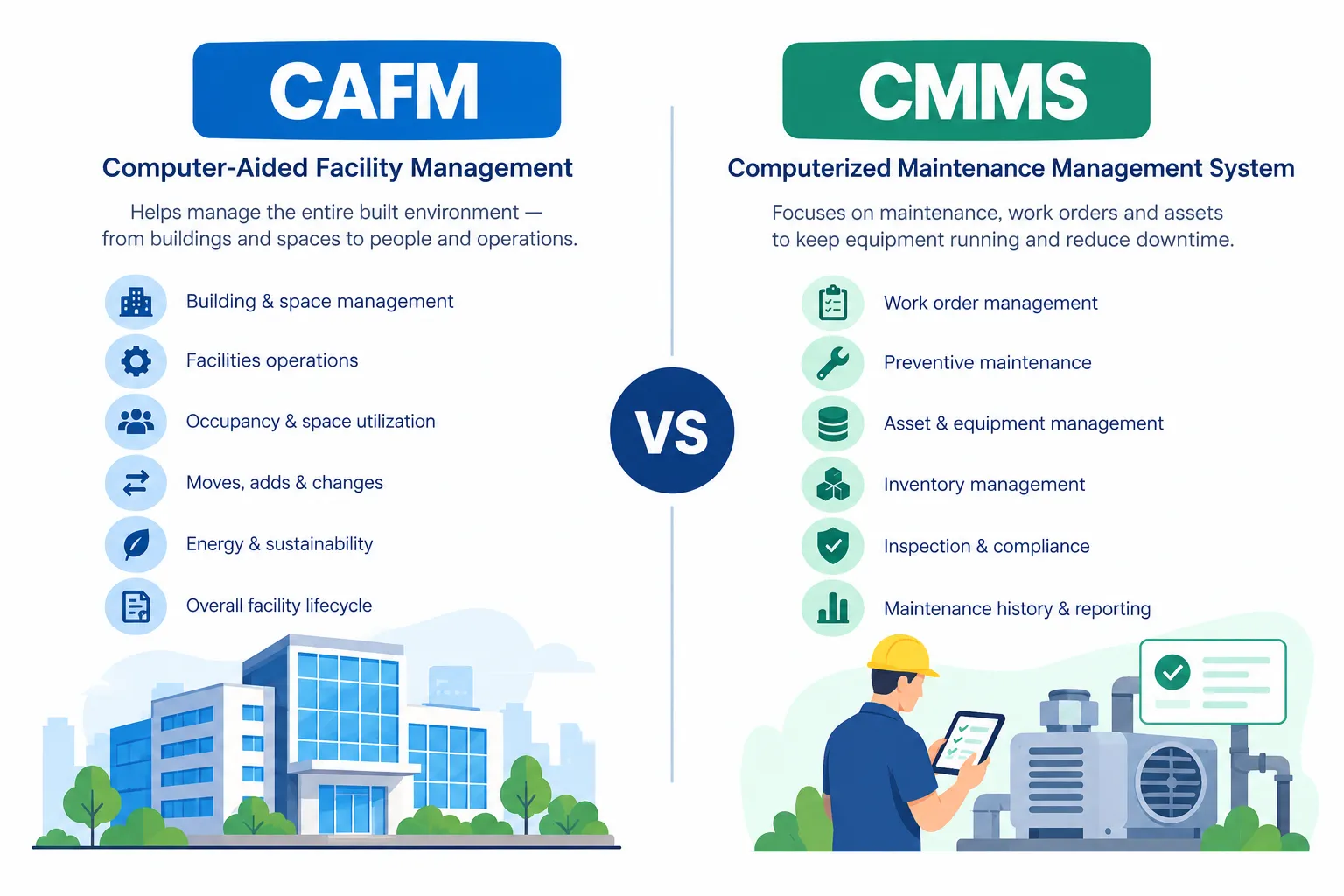
CAFM vs CMMS: What’s the Difference?
CAFM vs CMMS explained: Learn the key differences, features, use cases, benefits, and how to choose the right system for facility and maintenance management.

Monsoon Readiness Checklist for Facility Managers in India
The rains expose every gap in a facility's maintenance plan. Here's how to close them before the first downpour.
A New Chapter: Firmity Expands to Hyderabad
Closer Partnerships, Better Service