Payroll Management
Zoho Payroll Alternatives: 7 Best Payroll Software Options to Consider
· 8 min read
Zoho Payroll is a payroll solution designed to help businesses handle salary processing and related payroll tasks. Depending on the organization’s setup, payroll teams may also need to coordinate employee information, attendance, leave, compliance records, approvals, and salary payments. If you are searching for a Zoho Payroll alternative, compare platforms based on the work your team needs to complete each pay cycle—not just the name or number of features each product advertises.
Companies may look for a different payroll tool when their existing system no longer meets their needs. For some, the priority is handling attendance and leave data more smoothly; others may need employee management features, multi-location support, or better coordination with finance tools. While reviewing Zoho competitors, compare the functions each platform offers, its integration options, pricing structure, and relevant compliance support. Check the plan details with the provider to make sure it covers your business requirements.
Why Consider Zoho Payroll Alternatives?
Payroll software should match the way a company handles salaries, not force the team to change every existing process around it. Before replacing Zoho Payroll, identify the tasks that create the most friction, whether that means consolidating employee records, reducing repeated data entry, or managing salary approvals across departments. This gives you a clearer basis for evaluating alternatives and selecting a tool that solves specific problems rather than adding unnecessary functions.
Different payroll processing needs: Salary structures, allowances, deductions, reimbursements, and approval steps vary between businesses. Check that a platform supports the pay components and review process your organization uses.
Attendance and leave integration: If payroll depends on working days, shifts, overtime, leave, or unpaid days, confirm how those details reach payroll calculations. A suitable integration can reduce repeated data entry and correction work.
Statutory compliance requirements: For Indian payroll, review support for applicable statutory calculations, reports, and updates. Your organization remains responsible for confirming that its payroll practices follow the rules that apply to its employees and locations.
Employee self-service features: Payslips and access to personal payroll information can reduce routine requests to HR. Check which self-service functions are available and whether they are included in the plan.
Multi-location payroll management: Businesses operating across sites may need centralized records and consistent approval workflows while accounting for different employee groups and location-specific requirements.
Integration with HR and accounting systems: Review how the platform exchanges data with your current HR, attendance, accounting, and banking tools. Do not assume an integration is available unless the provider confirms it.
Pricing and scalability: Compare subscription costs, implementation, support, add-on modules, and any employee-based charges. Choose an option that fits your budget now and can accommodate likely workforce changes.
Best Zoho Payroll Alternatives
1. Firmity
Firmity is worth evaluating if your payroll needs are closely connected with employee management and facility operations. Its payroll offering sits alongside broader workforce and facility management capabilities, which can be relevant for organizations managing employees across multiple sites or properties. Connecting employee records, attendance, leave, and payroll workflows may help keep routine administration organized.
Relevant capabilities to review include payroll processing, employee information management, attendance and leave workflows, payroll reports, and visibility across multiple locations. Confirm the specific features and integrations available for your required plan and use case.
Best suited for: Facility-driven and multi-location organizations that want to evaluate payroll alongside employee and workforce operations. Explore Firmity’s payroll software
2. greytHR
greytHR is an HR and payroll platform businesses can consider when they want payroll processing alongside employee administration. Its offering includes payroll-related workflows and HR capabilities such as employee information, attendance, leave, and employee self-service. Available functions can depend on the product and plan, so check current package details before comparing it with Zoho Payroll.
For a fair evaluation, walk through a typical payroll cycle with the vendor: importing attendance, reviewing salary inputs, processing payroll, checking deductions, generating payslips, and maintaining records. This helps you see whether the platform suits the way your HR and finance teams work.
Best suited for: Businesses looking for an HR and payroll platform with connected employee administration.
3. Keka
Keka is an HR platform with payroll and workforce-related capabilities. Businesses evaluating it can review how payroll functions work with attendance, leave, employee records, and other HR processes. This can be useful when the team wants to manage payroll in the context of broader employee administration rather than treat it as a separate monthly task.
Check how salary components are configured, how attendance and leave data is handled, which payroll reports are available, and what employee self-service functions are included. Confirm that the product fits your compliance needs and existing systems.
Best suited for: Growing businesses that want payroll connected with broader HR and workforce processes.
4. RazorpayX Payroll
RazorpayX Payroll is worth investigating when your business wants payroll processing to work closely with salary disbursement and related payment workflows. This may be relevant for finance teams that want to reduce handoffs between payroll preparation and paying employees. Review the current product scope and confirm which payroll, compliance, and payment functions are available for your business and plan.
Compare the end-to-end process, not just the payout step. Check how employee details are maintained, how salary inputs are reviewed, what records and reports are generated, and which banking or accounting workflows are supported. Confirm eligibility, bank, and integration requirements directly with the provider.
Best suited for: Businesses looking to connect payroll processing with salary payment workflows.
5. Pocket HRMS
Pocket HRMS combines payroll with a broader set of HR management functions. Businesses considering it can review its approach to salary processing, employee records, attendance, leave, and employee self-service. A connected HRMS can be useful when the payroll team depends on information maintained by HR and managers throughout the month.
Request a practical demonstration that reflects your company’s actual payroll routine. Have the provider show how employee pay details are maintained, changes are processed, salary figures are reviewed, and payroll records are produced. Use the session to identify steps that still require spreadsheets or separate tools, and clarify how the software supports the compliance rules that apply to your business.
Best suited for: Organizations seeking an HRMS with integrated payroll and employee administration.
6. factoHR
factoHR offers HR and workforce management capabilities that businesses can evaluate alongside its payroll functionality. For organizations that want payroll to connect with employee records, attendance, leave, and other HR processes, the breadth of the platform may be worth reviewing. The right fit depends on the modules your business needs and how those modules work together.
When comparing factoHR with Zoho Payroll, check payroll processing, salary inputs, attendance integration, employee self-service, reporting, and support for your statutory requirements. Confirm current features and pricing with the vendor, especially if you need particular integrations or advanced workflows.
Best suited for: Businesses looking for payroll alongside wider HR and employee lifecycle tools.
7. HROne
HROne is a broader HR and human capital management platform that businesses can assess when payroll is one part of a larger set of employee processes. Its product range covers HR-related functions, so organizations should examine which modules are relevant and whether payroll connects smoothly with attendance, leave, and employee records.
Ask the vendor to demonstrate a normal payroll cycle and show how the platform handles salary inputs, approvals, reports, and employee access. Review implementation requirements, integrations, support, and the total cost of the modules you intend to use.
Best suited for: Organizations that want to evaluate payroll within a broader HR management platform.
How to Choose the Right Zoho Payroll Alternative?
Start by writing down the payroll steps your team follows each month. Include the information HR collects, attendance and leave inputs, finance checks, approvals, and reports that must be retained. Then ask each shortlisted vendor to demonstrate those same steps. This makes the comparison practical and helps you see where automation may save time or where manual work will remain.
Check statutory compliance capabilities: Confirm support for requirements applicable to your organization, and verify current obligations using official guidance.
Review attendance and leave integration: Ask whether attendance and leave can flow into payroll automatically, how exceptions are corrected, and whether managers can approve changes before payroll is finalized.
Compare salary processing and payouts: Review salary structures, deductions, reimbursements, approvals, payslips, payment files, and reports. Confirm which steps are automated and which require manual review.
Evaluate employee self-service: Check whether employees can access payslips and relevant payroll information, and whether the available functions suit your organization’s policies.
Review connections with your current tools: Find out whether the payroll platform can exchange information with the software your team already uses for finance, employee records, timekeeping, and salary transfers. Clarify how these connections are configured, whether updates happen automatically, and if integration fees or technical assistance will increase the overall cost.
Compare pricing, support, and scalability: Consider implementation, training, support, add-ons, and future employee growth—not just the headline subscription fee. Firmity’s guide to best payroll management software can provide another starting point for your shortlist.
Final Thoughts
Before settling on a replacement for Zoho Payroll, decide which problem the new software must solve. A company coordinating payroll with facility operations may want to examine Firmity, while businesses focused on HR administration or salary disbursement can investigate greytHR, Keka, RazorpayX Payroll, Pocket HRMS, factoHR, and HROne. Shortlist only the platforms that address your specific gaps, then verify their capabilities with the vendors.
Make your final choice after reviewing the vendor’s commercial terms, technical compatibility, and ability to handle your actual payroll requirements. Ask how regulatory changes are addressed and which payroll documents can be generated or exported. For businesses assessing Firmity as part of their workforce and facility operations, contact Firmity to discuss the specific processes you need the software to support.
Faqs About Zoho Payroll alternatives
Zoho Payroll pricing can vary by region, plan, and business requirements. Check the official Zoho website for current pricing, plan limits, and any additional costs before subscribing.
Zoho Payroll can be used for payroll tasks without adopting every Zoho product. However, connecting it with other applications may help streamline employee data, accounting, and related workflows, depending on your setup.
The right choice depends on client volume, payroll complexity, reporting needs, and access controls. Compare platforms based on multi-client management, compliance support, payroll processing, and the ability to keep each client's records separate.
Review data migration options, pricing, integrations, compliance support, and reporting capabilities. Ask the provider to demonstrate your regular payroll process and confirm that employee records and historical payroll data can be transferred before switching.
Author Bio

Syed Aadam
Syed Aadam is a software engineer with a Bachelor's and Master's in Information Technology with a specialization in Artificial Intelligence and Machine Learning. Having trained, and assisted in training foundational ML models for solving frontier scientific problems at the intersection of biodiversity and technology, Syed Aadam has been working to develop AI-enabled CMMS, ERP and CAFM softwares at Ufirm Technologies.
Talk to our team
Questions about facility management software? Leave your details and we'll get back to you within 24 hours.
More on Payroll Management
greytHR Alternatives: Best HR & Payroll Software to Consider
Explore the best greytHR Alternatives, compare leading HR and payroll software, and evaluate payroll, attendance, workforce, scalability, and key features.
Keka Alternatives in India: Best Payroll Software Options to Consider
Explore Keka alternatives in India, including Firmity, greytHR, and Zoho Payroll. Compare payroll features, workforce management, and business needs to find the right Payroll Software for your organization.
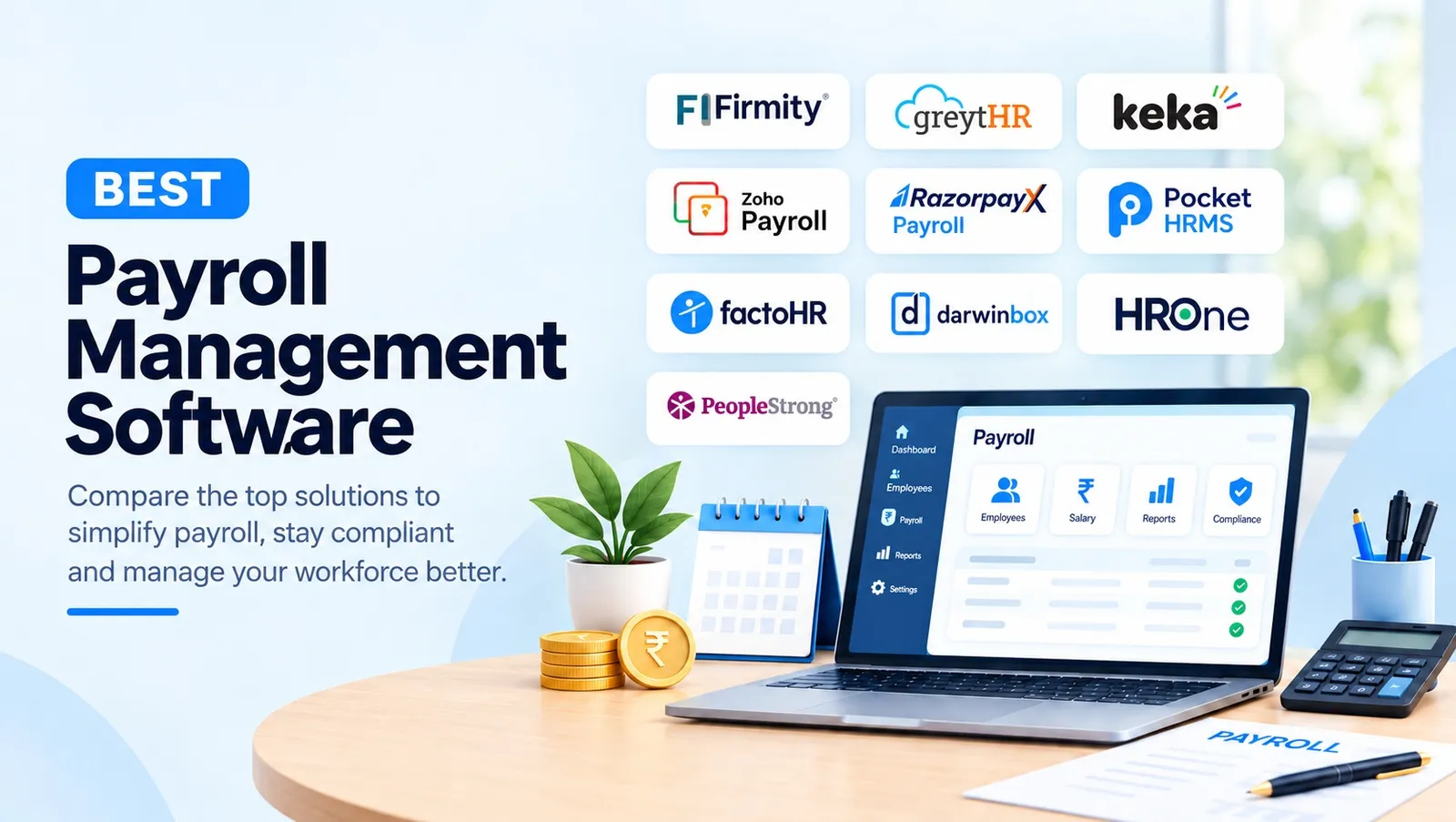
Best Payroll Management Software in India: Top Payroll Software
best payroll management software in India, compare top payroll platforms, key features, benefits, and selection tips to find the right solution for your business.