CMMS
7 Top CMMS for Healthcare in 2026 (Compared for Hospitals and Clinics)
· 10 min read
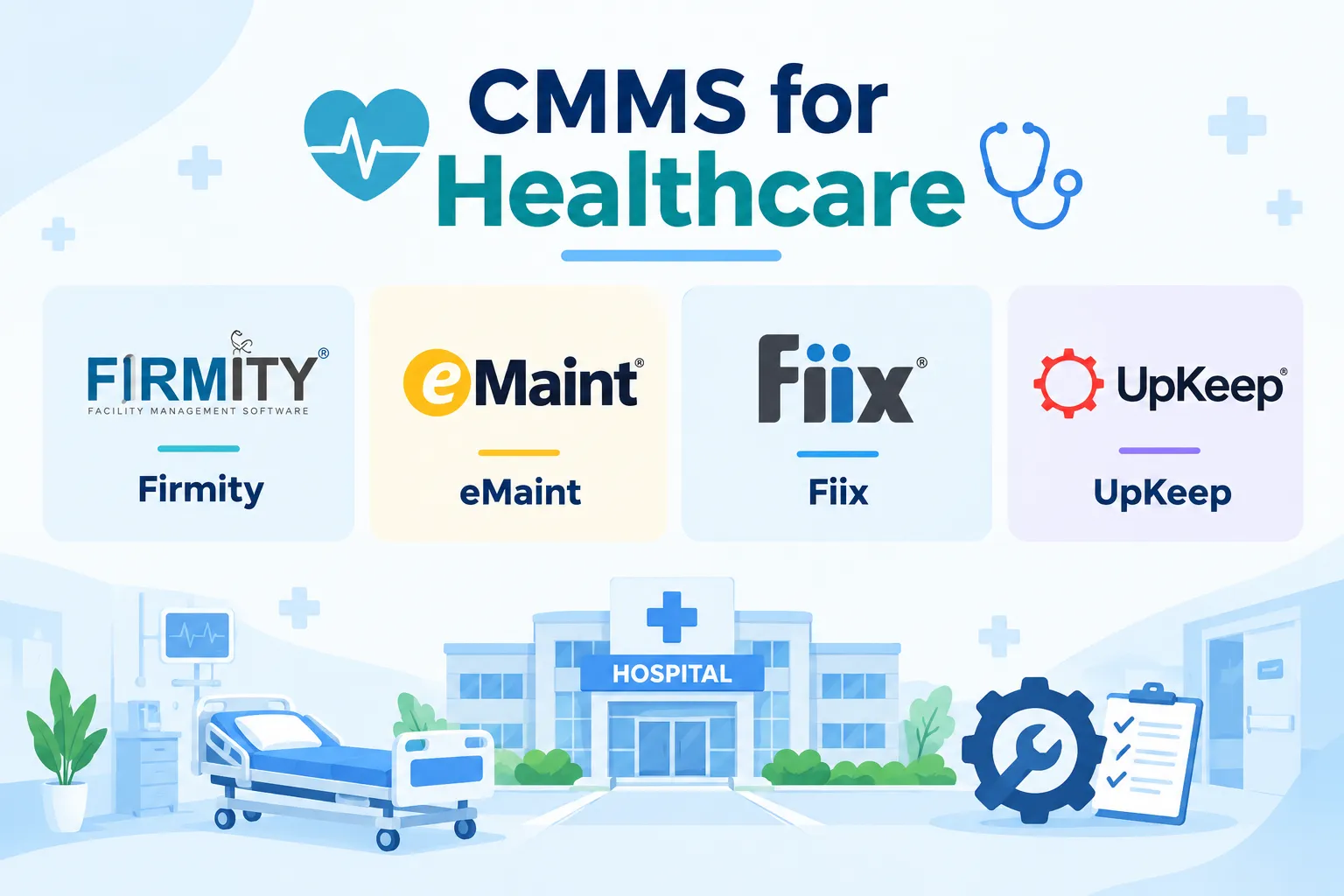
If you're searching for the top CMMS for healthcare, you're probably juggling a lot: medical equipment that can't afford to fail, building systems that run around the clock and an inspection that always seems to be coming up. A CMMS, short for computerized maintenance management system, keeps all of that in one place, from work orders to service history. The trouble is that most rankings are written for American hospitals, so Indian facility managers are left guessing what applies to them. This guide compares seven options in plain language, with India-specific questions to ask each vendor.
Here's how we built the list. We looked at healthcare CMMS roundups from Coast, SoftwareConnect and SelectHub, plus others, and read each vendor's own description. We haven't tested every product hands-on, so each entry ends with something to check in a demo. Firmity is our product and takes the first slot, but its public pages don't mention healthcare, so we've explained honestly where it fits and where you should ask more questions.
Why Healthcare Facilities Need a CMMS
Healthcare maintenance is different from maintaining a warehouse or an office block. When a piece of equipment goes down, it can disrupt care, and that makes reliability a patient-safety issue as well as a cost issue. At the same time, hospitals have an enormous number of assets spread across wards, theatres, labs and plant rooms, each with its own service schedule. Keeping all of that on paper or in scattered spreadsheets is how things get missed.
A CMMS brings those moving parts together. Every asset has a record, every job has an owner and every service leaves a trail you can point to. That trail matters when an inspector or an internal auditor asks what was done and when. It also helps your team shift from reacting to breakdowns to planning maintenance before problems appear.
What to Look for in a Healthcare CMMS
Before comparing names, get clear on what a healthcare team actually needs from the software. These are the features that tend to matter most:
Work orders and preventive maintenance: jobs raised, assigned and tracked, with recurring schedules for routine servicing.
Asset history and warranty tracking: a record for each piece of equipment, including past repairs and warranty details.
Spare parts and contracts: visibility of the parts you hold and the service agreements you rely on.
Mobile access and an audit trail: technicians updating jobs on the spot, with timestamps you can show later.
Multi-site dashboards: one view if you run more than one block, branch or hospital.
Notice that none of these are exotic. The best healthcare CMMS is usually the one that does the basics reliably and gives you the records to prove it. Extra modules are nice, but they shouldn't distract you from the fundamentals.
How We Picked These Options
We started with the tools that show up repeatedly in healthcare CMMS roundups, then checked how each describes its healthcare fit. We also considered how easy each product looks to adopt, and whether Indian buyers can realistically get support. Because most of the well-known names are international, we've flagged India availability as a question to ask every time.
You won't see prices in this guide, and that's deliberate. Vendors change plans often and many quote by user, site or asset count, so a figure printed here could be wrong within weeks. Use the last column of the table below as your list of demo questions. What a vendor tells you live is worth more than any number on a web page.
Top CMMS for Healthcare at a Glance
Option | Good fit when | Strongest area | Ask in the demo |
|---|---|---|---|
Firmity | You want a general CMMS to evaluate for core maintenance work | Work orders, recurring maintenance, asset history | How it fits clinical equipment and your inspection needs |
eMaint | You run several healthcare sites | Tracking assets and scheduling routine servicing | Local support in India and pricing in rupees |
Fiix | You want a cloud CMMS with strong work order handling | Managing work orders and updating jobs from a phone | How it handles your asset volume |
UpKeep | You want mobile-first maintenance software | Cutting down surprise breakdowns on the ward floor | Healthcare-specific features and India support |
FMX | You want a CMMS aimed at facility issues and inspections | Facility upkeep and getting ready for inspections | Whether it is available and supported in India |
Brightly TheWorxHub | You’d like software designed around hospital needs from day one | Maintenance software made for healthcare | India availability and implementation |
MaintainX | You run a lean clinical maintenance team | Mobile work orders and checklists | What it offers for inspection and compliance records |
The 7 Top CMMS for Healthcare, One at a Time
1. Firmity
If you manage a hospital or clinic's facility maintenance and want a straightforward Indian option to evaluate, Firmity facility management software is worth a look. Its CMMS software lets you raise and track work orders with an audit trail and set recurring maintenance cycles by day, week, or month. Technicians can scan a location QR code, open the task, complete the checklist, and attach photo evidence. Each asset keeps its own service history, warranty, and linked spare parts, and dashboards show total, completed, and overdue work orders across sites.
Here's the honest part. Firmity's public pages name manufacturing, education, and residential estates as its industries, and they don't mention healthcare or medical-equipment compliance. So treat it as a general CMMS that your facility team can test for core maintenance work, and ask direct questions in a demo about clinical equipment and your inspection records. If a purpose-built healthcare tool is a must, the options below may suit you better.
2. eMaint
eMaint appears in several healthcare CMMS roundups, and Coast describes it as offering asset tracking, preventive maintenance scheduling, and most of the capabilities you'd expect from a modern CMMS. FitGap also lists it among tools suited to multi-site healthcare operations. That makes it a reasonable candidate if you manage several blocks or hospitals. As an international product, the first things to check are India support and local pricing. Ask for a demo using a few of your real assets.
3. Fiix
Fiix is a cloud CMMS that shows up in healthcare lists, and SelectHub's analysis gives it strong marks for work order management and mobile access. If your priority is getting jobs raised, assigned and closed cleanly from phones, it deserves a place on your shortlist. Like most tools here, it's an international product, so confirm how support works for Indian customers. Try it with a realistic mix of equipment, since volume can change how a system feels.
4. UpKeep
UpKeep is a mobile-first maintenance platform, and SoftwareConnect describes it as helping maintenance teams overcome healthcare challenges by keeping equipment operations reliable. That mobile focus suits technicians who spend their day moving around a large building. It's worth asking exactly which healthcare-oriented features are included in the plan you'd buy. As with other international tools, check what local support and onboarding look like. A short trial with your technicians will tell you whether they actually enjoy using it.
Still Running Hospital Maintenance on Spreadsheets?
If your team tracks jobs in notebooks, chat messages, and spreadsheets, you already know how easily a repair or a service date can slip through. A short walkthrough can show you how the same jobs would look in a CMMS, from request to closed work order. Firmity's team can build the demo around the kind of equipment you maintain and answer your healthcare questions directly. Tell them what you're managing today, and they'll reply within 24 hours.
Talk to the Firmity team and book a walkthrough
5. FMX
FMX is SoftwareConnect's top pick for healthcare CMMS, and it says the system helps resolve equipment malfunctions and facility issues to support patient safety. It also says the tool can help medical facilities prepare for inspections and compliance. That focus is appealing if inspections are a big part of your calendar. FMX is a US-based product, so the key question is whether it's available and supported in India. Treat that as your first email to the vendor.
6. Brightly TheWorxHub
Coast describes Brightly's TheWorxHub as purpose-built for healthcare businesses like hospitals and senior living. That's the strongest healthcare positioning on this list, so it's worth exploring if you want a tool designed around clinical environments from the start. Purpose-built tools often come with more structure and, sometimes, a bigger implementation. Ask about India's availability and what setup would look like for your facility. Compare the answers with a lighter tool before you decide.
7. Maintain X
MaintainX is a mobile-first work order and checklist platform, and FitGap lists it among tools for lean clinical team maintenance. If you have a small technical team and want something quick to roll out, it's a sensible one to try. Checklists and work orders on a phone are its main strengths. Ask about healthcare compliance features and how the plan scales if you add sites. As with the others, check India support early.
India-Specific Questions to Ask Every Vendor
Most healthcare CMMS rankings skip the questions that matter most to Indian buyers. Ask whether the vendor has local support and what hours it covers. Ask where your data is stored and who can access it. Ask whether pricing is available in rupees and how it changes as you add users or sites. And ask how the system's records can support your inspections and accreditation needs.
That last point deserves care. India's apex body for healthcare quality and patient-safety standards is the National Accreditation Board for Hospitals and Healthcare Providers (NABH), and its standards shape what hospitals document. No software gives you accreditation by itself. What a CMMS can do is keep tidy, timestamped records that make your own documentation easier to produce.
How to Choose the Right Healthcare CMMS
Start by counting what you manage: how many assets, how many blocks or sites and how many technicians. Then list your must-haves, such as preventive maintenance schedules, mobile access and exportable reports. Decide how much customisation you need, because purpose-built tools can be more structured than general ones. Finally, be honest about your budget, including setup and training time.
When you have two or three names, test each with one real maintenance job from start to finish. Raise a request, turn it into a work order, assign it, complete it on a phone and check the report afterwards. How natural it feels will tell you more than any feature list. If your technicians dislike it in the trial, they'll dislike it every day.
Common Mistakes When Buying a Healthcare CMMS
The most common mistake is starting without clean asset records. A CMMS only works as well as the information in it, so spend time listing your equipment properly. Another is ignoring support, because a tool that's hard to get help with becomes a burden fast. And a third is paying for features nobody uses, which is easy to do when a long feature list looks impressive.
A quieter mistake is forgetting the people who'll use it every day. If technicians find the system slow or confusing, they'll quietly return to notebooks and messages. Involve them early, keep the setup simple and review how it's going after a month. A modest system that gets used beats an impressive one that doesn't.
Final Thoughts
Finding the top CMMS for healthcare comes down to matching your needs, not chasing the longest feature list. Get your asset records in order, shortlist two or three tools and test each with a real job. If you'd like to see how a straightforward CMMS handles your maintenance routine, the Firmity team is happy to walk you through it.
FAQs : top CMMS for healthcare
It's software that helps hospitals and clinics plan, track and record maintenance for equipment and facility systems. It keeps work orders, service schedules, asset history and spare parts in one place.
There's no single best choice. Brightly TheWorxHub is positioned as purpose-built for healthcare, FMX is a top pick in some roundups, and a general tool like Firmity may suit teams that mainly need core maintenance work. Test your shortlist with your own equipment.
It can, because it keeps timestamped records of work done. It doesn't replace your own procedures, but it makes documentation easier to produce when someone asks for it.
Yes. Hospital management software typically covers patient-facing and administrative processes. A CMMS focuses on maintaining equipment and facilities.
Author Bio

Syed Aadam
Syed Aadam is a software engineer with a Bachelor's and Master's in Information Technology with a specialization in Artificial Intelligence and Machine Learning. Having trained, and assisted in training foundational ML models for solving frontier scientific problems at the intersection of biodiversity and technology, Syed Aadam has been working to develop AI-enabled CMMS, ERP and CAFM softwares at Ufirm Technologies.
Talk to our team
Questions about facility management software? Leave your details and we'll get back to you within 24 hours.
More on CMMS
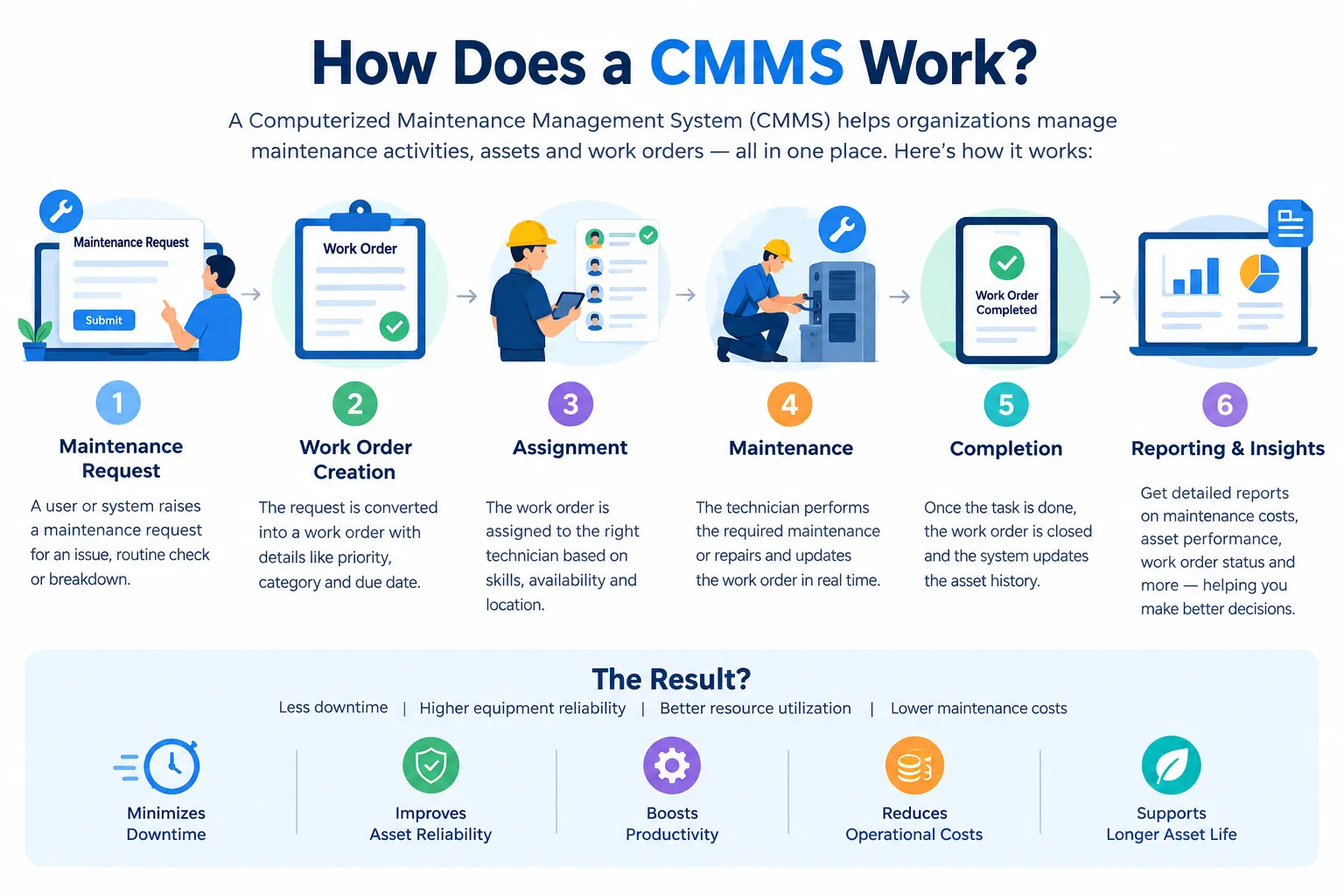
How Does a CMMS Work? A Step-by-Step Guide for Indian Facility Teams
How Does a CMMS Work? A Step-by-Step Guide for Indian Facility Teams Meta title: How Does a CMMS Work? Step-by-Step Guide for India Meta description:…
10 Best CMMS Software in 2026 (Compared for Indian Businesses)
What is CMMS software? Quick refresher before we compare anything. CMMS stands for computerized maintenance management system. If you're new to the…
15 CMMS Features: Key Features of CMMS Software
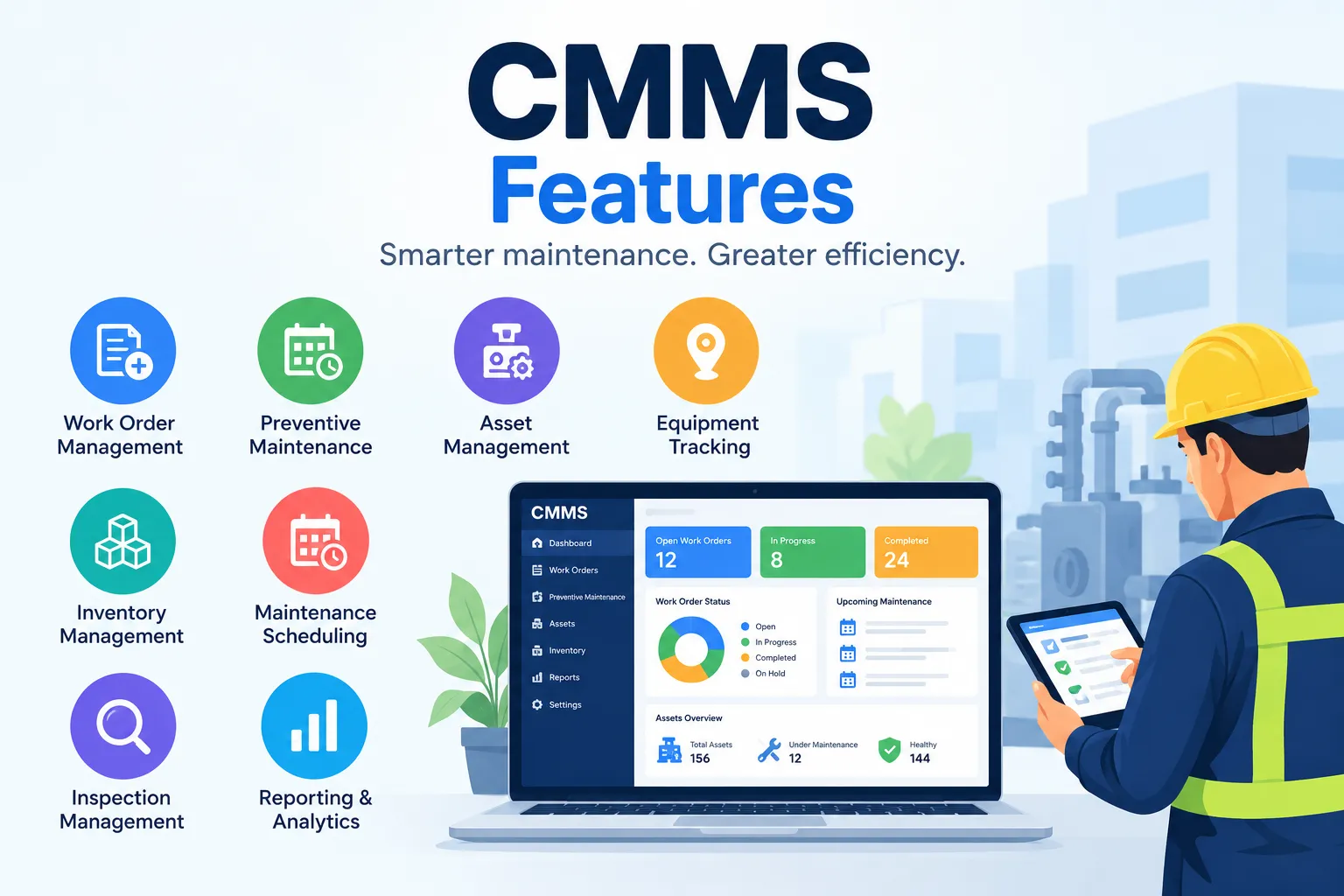
key CMMS features, from work orders and preventive maintenance to asset tracking, inventory, inspections, reporting, mobile access, and integrations.