CMMS
7 Best MaintainX Alternatives & Compitors (Compared for Facility and Maintenance Teams)
· 10 min read
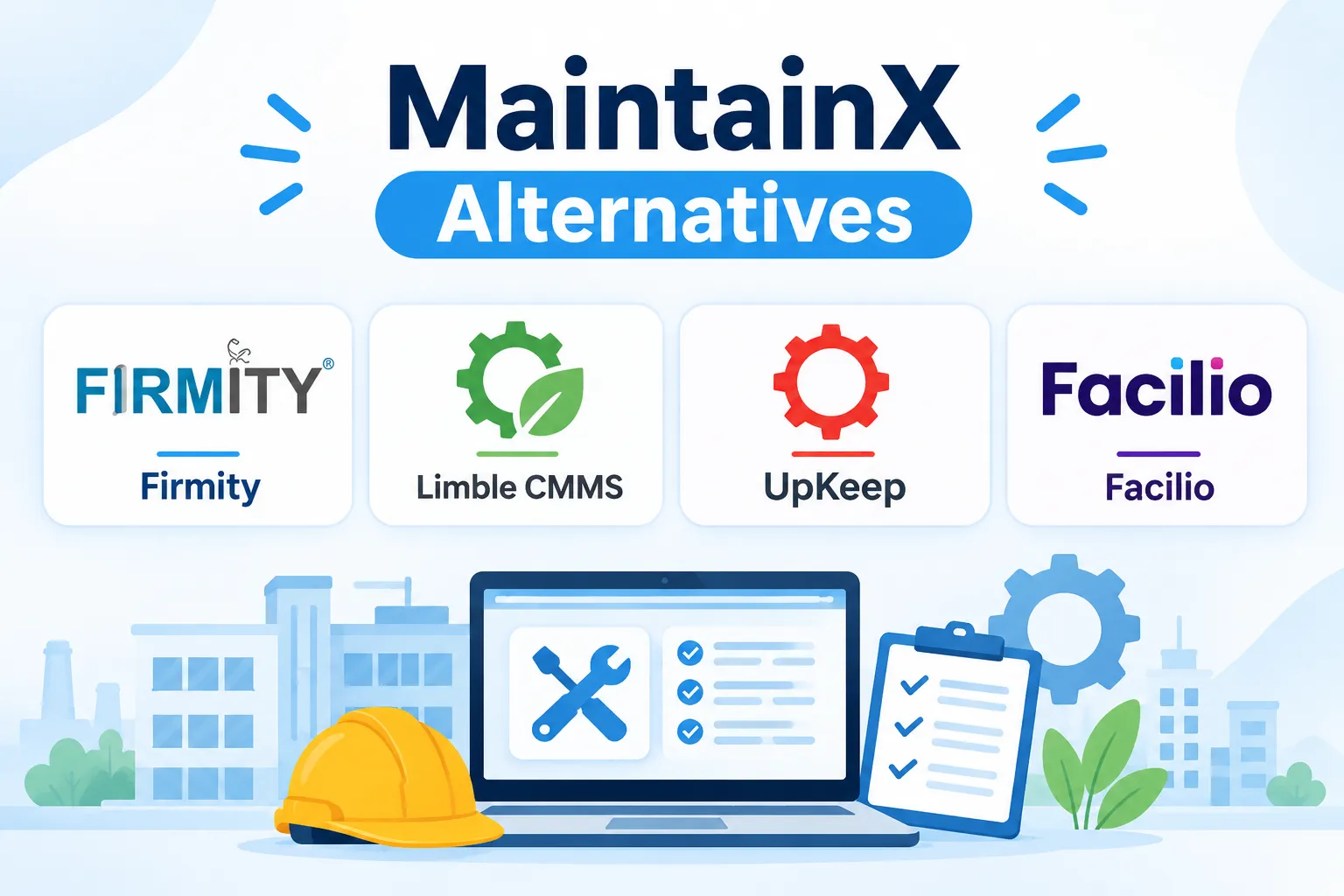
If you’re looking for MaintainX alternatives, you probably don’t dislike the tool. It likely worked well early on, and then something shifted: the team grew, a second site came online, or someone asked for payroll and expenses to live in the same system. That’s usually the moment people start comparing. We’ve lined up seven options below, with Firmity first, and judged each one on the same checklist. One quick disclosure: Firmity is our own product, so we’ve kept the trade-offs for every tool, ours included, right out in the open.
Short on time? Here’s the quick comparison
Here’s the quick version before we dig into each tool. We’ve left prices out on purpose because they change often, so have a look at each vendor’s pricing page before you decide.
Tool | Best for | Standout strength |
|---|---|---|
Firmity | Indian facilities that want CMMS and ERP in one place | Maintenance plus payroll, inventory, visitors and expenses on one platform |
Limble CMMS | Teams that want a simple, phone-friendly CMMS | Work orders, preventive maintenance and asset tracking, with offline mobile and QR scanning |
UpKeep | Field-heavy, mobile-first maintenance teams | iOS and Android apps with offline mode, plus parts inventory |
Fiix | Factory and plant teams with equipment-heavy sites | Cloud CMMS from Rockwell Automation with an app exchange for integrations |
eMaint | Plants moving toward condition monitoring | Connects with Fluke sensors and condition-monitoring software |
Facilio | Owners and operators looking after many buildings | A connected CMMS built around portfolios, with AI features |
Xenia | Chains and franchises running checklists across outlets | Checklists, inspections and work orders in one mobile app |
Why do teams start looking for MaintainX alternatives?
MaintainX is a popular mobile-first tool for work orders, procedures and team messaging, and its free Basic plan lets small teams start without a big budget conversation. So why do people look around? Often it’s plain growth. MaintainX prices per user, which feels easy at ten technicians and a lot heavier at a hundred. That’s why it’s worth checking how each tool charges before you fall for its features, because the pricing model can matter as much as the feature list.
The second reason is scope. Some teams want maintenance to talk to inventory, vendors, payroll or expenses, and a maintenance-only app can only stretch so far. Others run several facilities and want one view across all of them, or they need sensor data and inspection audits that call for a different kind of platform. None of this makes MaintainX a bad choice. It just means the right tool depends on what your team does all day. If you’d like a wider list first, our guide to top CMMS software is a good starting point.
How did we compare them?
To keep things fair, we asked the same questions about every tool. Can it schedule preventive maintenance and run work orders without anyone chasing people? Does it track assets properly? Is the mobile app something technicians will actually open? Can it report across more than one site, and does it connect to your other systems? Preventive maintenance gets extra weight, because the US Department of Energy’s FEMP describes well-run operations and maintenance as one of the most cost-effective ways to keep facilities reliable, safe and energy efficient.
Everything below comes from each vendor’s own product pages and public listings, reviewed in October 2026. We haven’t run hands-on trials of every tool, so think of this as a well-researched shortlist rather than a lab test. One more thing if you’re in India: we haven’t verified local support, rupee billing or on-ground implementation for the international tools, so ask each vendor about those directly before you commit.
The 7 best MaintainX alternatives in 2026
1. Firmity: best for Indian teams that want CMMS and ERP in one place
Firmity is a cloud-based facility management platform, built in India, that puts CMMS software and ERP in the same system. On the maintenance side you get task and PPM scheduling, work orders, and QR-tagged assets, so a technician can scan a code and see history, AMC details, and spares. Anyone on site can raise a complaint by scanning a QR code, and the ticket goes straight to a technician with a live status board and an SLA trail. It also runs on Android and iOS, with the same live data as the web app.
Here’s where it really stands apart from a pure maintenance app. The same platform covers inventory and vendors with automated purchase orders and GRN tracking, visitor check-ins, geo-fenced facial-recognition attendance, payroll with automated TDS, PF and ESI deductions, and expense approvals with budget caps. If your facility team currently juggles a maintenance tool, a payroll spreadsheet, and a register at the gate, that consolidation is the whole point. Firmity is used by hotels, hospitals, universities, and manufacturing companies.
2. Limble CMMS: best for a simple, phone-friendly CMMS
Limble is a maintenance-first CMMS that covers the basics well: work orders, preventive maintenance scheduling and asset tracking. Technicians can update jobs from the mobile app, scan QR codes to pull up equipment, and keep working when the connection drops, since the app has an offline mode. Limble also markets itself on being easy to learn, which matters more than people admit when you’re asking a whole floor of technicians to switch tools.
The flip side is scope. Limble is built around maintenance, so if you’re hoping payroll, visitor logs or attendance will live in the same system, you’ll need other tools alongside it. Plan details vary too, so check which features sit in which tier before you commit. Best for: teams that want a clean, no-fuss CMMS and don’t need ERP-style modules.
3. UpKeep: best for mobile-first maintenance teams
UpKeep leans hard into mobile. It has dedicated iOS and Android apps where technicians can create and close work orders, look up assets and parts, and carry on offline with automatic sync afterwards. Behind that sits the usual CMMS toolkit: preventive maintenance, asset management, and parts inventory, plus an AI assistant it calls Nova. UpKeep describes itself as an asset operations management platform, which is a fancy way of saying it wants to link maintenance with reliability and operations data.
UpKeep sells tiered plans, so confirm which one includes preventive scheduling and offline access before you sign up. And like Limble, it’s a maintenance tool rather than a full back-office suite, so don’t expect payroll or visitor management from it. Best for: field-heavy maintenance teams that practically live on their phones.
4. Fiix: best for industrial teams that want integrations
Fiix is a cloud-based CMMS owned by Rockwell Automation, and that parentage tells you who it’s built for. It covers asset management, work orders, parts and supplies, and analytics and reporting, with a mobile app for technicians and an app exchange for integrations. Fiix also supports condition-based maintenance through hardware integrations that can trigger work orders from live equipment data, and it offers AI features such as Asset Risk Predictor to help spot failures earlier.
That industrial lean is also the thing to weigh. If your world is mostly offices, campuses, or residential blocks rather than production lines, you might never touch some of that depth, so ask about setup effort for a team your size. Best for: manufacturing and plant teams, especially those already working with Rockwell’s FactoryTalk tools.
Not sure which one fits your sites? If you’d like to see how Firmity would handle your maintenance, assets and day-to-day facility tasks, tell the team what you run today and they’ll show you the modules that matter for you. They say they reply within 24 hours. Talk to the Firmity team.
5. eMaint: best for plants heading toward condition monitoring
eMaint comes from Fluke Reliability, part of the company best known for industrial test tools, and its big selling point is how it ties maintenance to machine health. It connects with Fluke wireless vibration sensors and eMaint’s condition-monitoring software, so alerts can turn into work orders instead of sitting in a separate dashboard. It also integrates with ERP, SCADA, PLC and BMS systems, which matters a lot if your plant already runs those.
The catch is that the condition-monitoring side means extra hardware and setup on top of the CMMS itself. If all you want is tidy work orders and PM schedules, you may never use that advantage. Best for: asset-heavy plants that are serious about moving from scheduled maintenance toward predictive maintenance.
6. Facilio: best for multi-site property and facility portfolios
Facilio calls its product a Connected CMMS, and it’s aimed at people who look after lots of buildings. The platform covers preventive maintenance, work orders, vendor management, assets, inspections, inventory, visitor management and workplace management, with a mobile CMMS app and AI features branded as Atom. Facilio also says it was named a Leader in the 2025 Verdantix Green Quadrant for commercial buildings CMMS, so if analyst reports matter to your procurement team, that’s worth a look.
Facilio says it prices by portfolio, meaning sites or square footage, rather than per user, which can be easier to plan around for a big estate. The other side of that is fit: it’s built for portfolios, so a single-site team could end up with more platform than it needs. Best for: property owners and facility service providers running many sites.
7. Xenia: best for multi-location frontline teams
Xenia isn’t a classic CMMS, and that’s partly why it earns a spot here. It’s a frontline operations platform where checklists, SOPs, inspections and audits sit alongside work orders and preventive maintenance in one mobile app. When an inspection finds a problem, Xenia can create a work order straight from it, photos attached. It’s built for hospitality, retail, food and beverage, and facility teams that run lots of locations.
If your biggest headache is consistency across sites rather than deep asset reliability, that’s a real advantage. But if your maintenance leans on spare parts, meters and reliability analysis, compare it against a dedicated CMMS first. Best for: multi-location teams in hospitality, retail and facilities who want inspections and maintenance in one place.
So, which MaintainX alternative should you pick?
Start with the problem that pushed you to look. If the bill is the issue, compare how each tool charges, since some price per user and others price by site or portfolio. If you want maintenance and back-office work together, Firmity is the one on this list whose public pages show payroll and expense modules next to the CMMS. If sensors matter, look at eMaint and Fiix. For many buildings, try Facilio. For checklists across locations, try Xenia. For a straightforward, phone-friendly CMMS, Limble or UpKeep are the obvious pair.
Whatever you shortlist, please don’t buy off a brochure. Ask for a demo with your own assets and a real workflow, like a breakdown ticket from start to finish, and let a couple of technicians try the mobile app. If their reaction is “oh, that’s easy”, you’ve probably found your tool. If they sigh and ask for the old spreadsheet back, keep looking.
Planning to switch? Sort these out first
Before you move, pull together what you can and tidy it up. That means your asset list, open work orders, preventive maintenance schedules, and any procedures or checklists your team relies on. Then rebuild the schedules in the new tool and run both systems side by side on one site or one shift for a short while. It’s far calmer than switching everything on a Monday morning. Finally, ask the new vendor exactly how data import works, because that’s where surprises like to hide.
The bottom line
There’s no single winner among these MaintainX alternatives, only a best fit for how your team works. Firmity suits facilities that want maintenance and back-office work together and Limble & UpKeep suit teams that want a clean, phone-first CMMS. Fiix and eMaint lean industrial, Facilio is for big portfolios, and Xenia is for consistency across locations. Pick two or three, test them on a real workflow, and let your technicians have the final say.
Ready to see Firmity with your own sites and assets? Get in touch, tell the team what you manage today, and they’ll walk you through what fits. They say they reply within 24 hours. Contact Firmity.
FAQs : MaintainX alternatives
It depends on what you need. If you want maintenance, inventory, payroll and deductions like TDS, PF and ESI in one India-built platform, Firmity is the natural place to start. If you only need a phone-friendly maintenance app, Limble and UpKeep are worth a look. We haven’t verified India-specific support for the international tools, so ask them directly.
Going by each vendor’s public pages, Firmity is the one on this list that shows payroll and expense modules alongside its CMMS. The others mostly focus on maintenance and operations, so if you need back-office modules from them, confirm with the vendor before you sign anything.
Facilio is built around portfolios, Firmity highlights visibility across facilities, and Xenia is made for multi-location teams. Whichever you shortlist, ask the vendor to show a multi-site dashboard with your own sample data, because that tells you more than any feature list.
eMaint connects with Fluke wireless vibration sensors and condition-monitoring software, and Fiix supports condition-based maintenance through hardware integrations. Either way you’ll need compatible sensors, so ask each vendor exactly what hardware and setup the full picture requires.
There’s no single answer. It depends on how many assets, sites and schedules you’re moving and how clean your data is. A pilot on one site is the safest way to find out. Ask your shortlisted vendors for a realistic timeline based on your numbers, not a generic promise.
Author Bio

Syed Aadam
Syed Aadam is a software engineer with a Bachelor's and Master's in Information Technology with a specialization in Artificial Intelligence and Machine Learning. Having trained, and assisted in training foundational ML models for solving frontier scientific problems at the intersection of biodiversity and technology, Syed Aadam has been working to develop AI-enabled CMMS, ERP and CAFM softwares at Ufirm Technologies.
Talk to our team
Questions about facility management software? Leave your details and we'll get back to you within 24 hours.
More on CMMS
7 Top CMMS for Healthcare in 2026 (Compared for Hospitals and Clinics)
Looking for the top CMMS for healthcare? Compare 7 maintenance software options for hospitals and clinics.
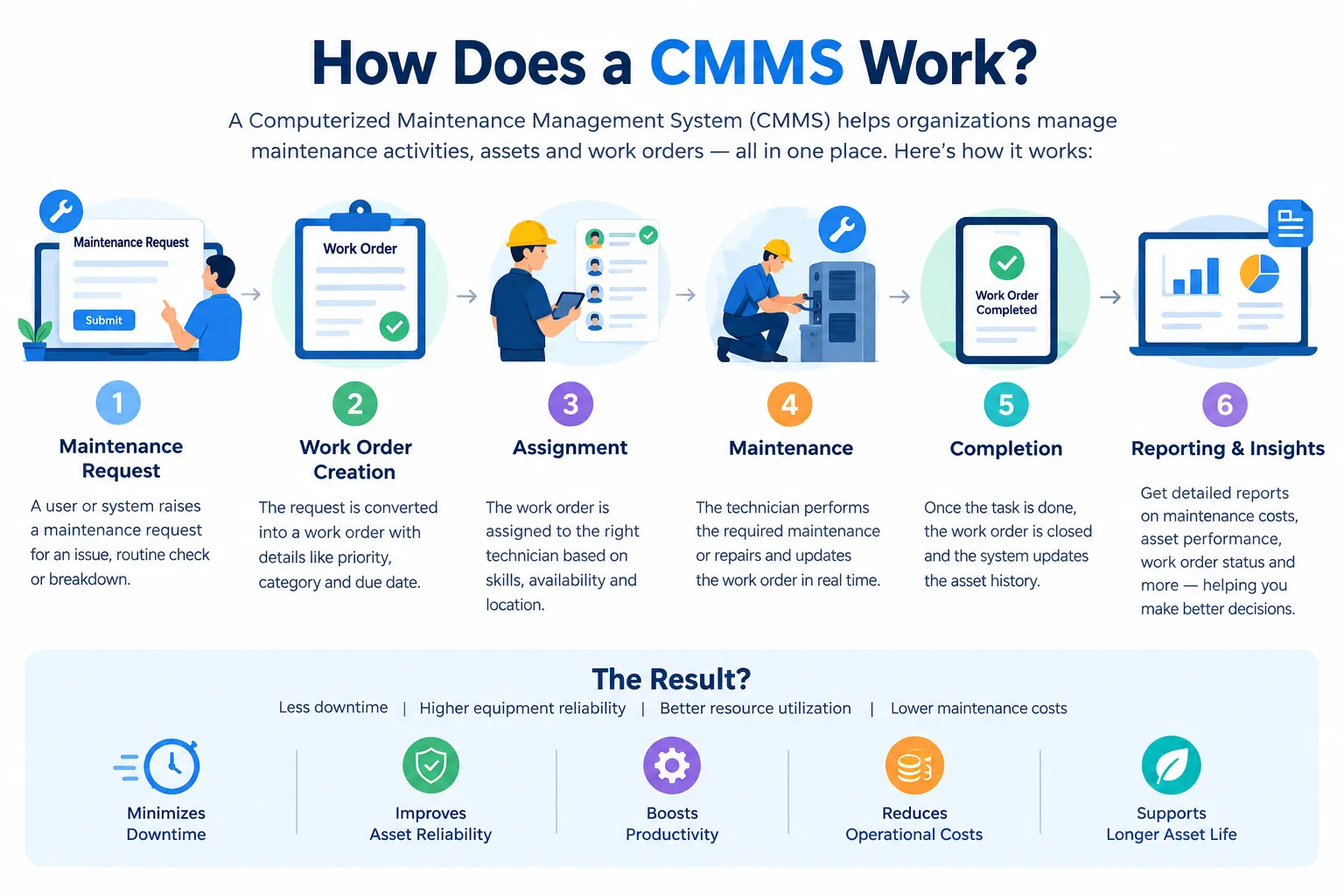
How Does a CMMS Work? A Step-by-Step Guide for Indian Facility Teams
How Does a CMMS Work? A Step-by-Step Guide for Indian Facility Teams Meta title: How Does a CMMS Work? Step-by-Step Guide for India Meta description:…
10 Best CMMS Software in 2026 (Compared for Indian Businesses)
What is CMMS software? Quick refresher before we compare anything. CMMS stands for computerized maintenance management system. If you're new to the…