Guide
NABH Equipment Maintenance: What Hospitals Must Record and How a CMMS Helps
· 3 min read
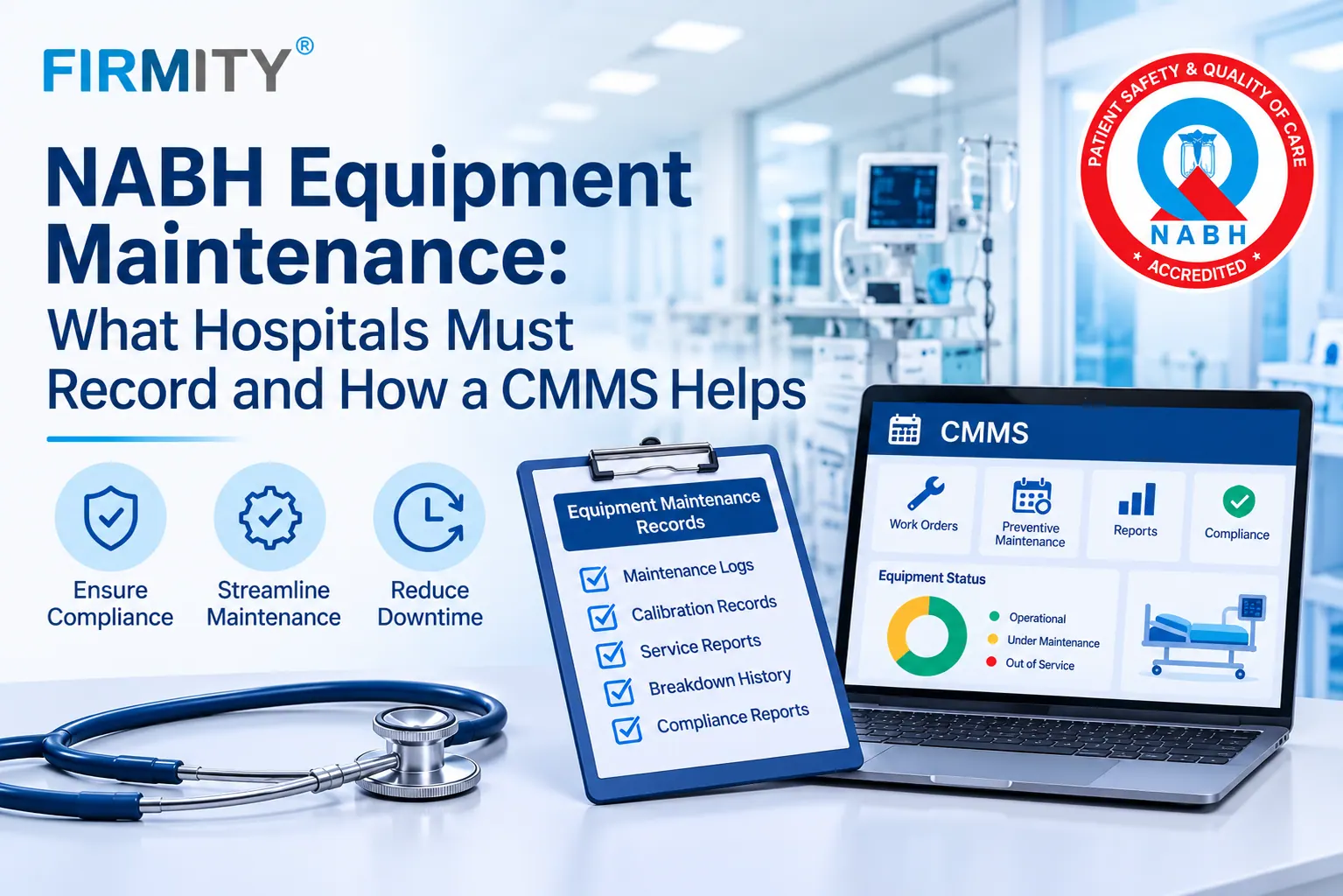
Ask any hospital engineering head what the week before a NABH assessment looks like. Files are pulled out, calibration stickers are checked, and someone is chasing a vendor for a service report from eight months ago.
It does not have to work that way. This article lists the maintenance records a hospital is expected to keep and shows how a CMMS keeps them ready every day of the year.
What NABH expects from facility and equipment management
The NABH hospital standards include a chapter on Facility Management and Safety. In plain terms, it expects a hospital to show that:
Buildings, utilities and equipment are safe for patients, staff and visitors.
There is a documented plan for operating and maintaining them.
Medical equipment is inventoried, maintained and calibrated on schedule.
Breakdowns are recorded and attended to.
Utilities such as power, water and medical gases are available round the clock, with backup.
Fire and other emergencies are planned for and drills are
held. Assessors do not take your word for it. They ask for evidence.
The records you should be able to produce
Equipment inventory
A complete list of medical and engineering equipment with location, make, model, serial number and install date.
Preventive maintenance plan and proof
A schedule for each asset, and a record that each task was done: date, technician, checklist and findings.
Calibration records
Due dates, certificates and the status of each device that needs calibration. Breakdown history
When each breakdown was reported, who attended, how long it took and what was replaced.
AMC and CMC contracts
Which equipment is under contract, with whom, until when, and a record of each vendor visit.
Utility logs
DG set runs, water quality checks, medical gas checks, lift and fire system inspections.
Condemnation records
How equipment is retired and removed from service.
Why paper and Excel fail here
Records live in different places. Biomedical has one register, engineering another, stores a third.
Schedules depend on memory. A missed PPM is only noticed at audit time.
Vendor reports go missing. Service reports sit in email or on a clipboard.
No trail. A spreadsheet cannot show who changed what and when.
How a hospital CMMS solves it
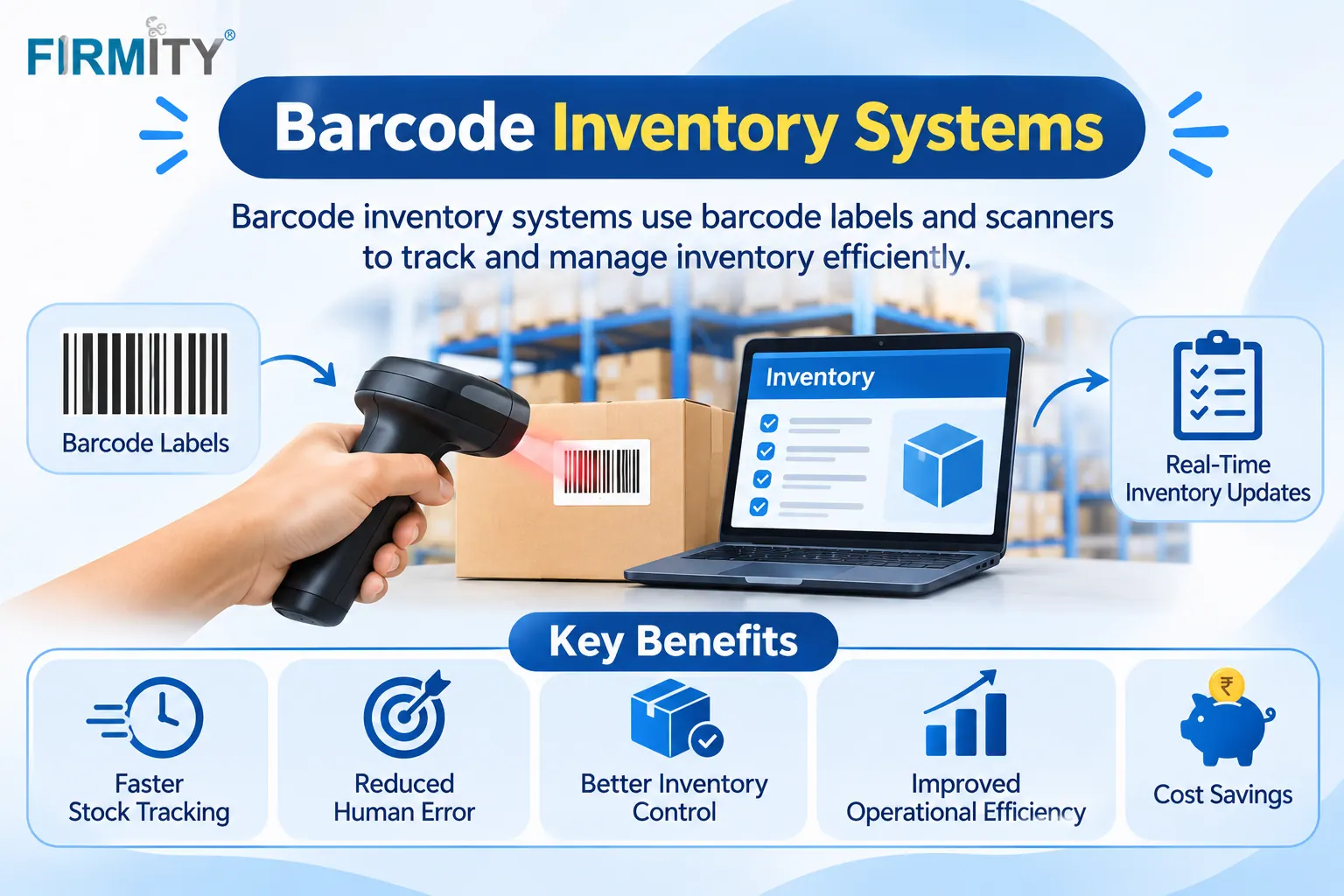
One asset register with QR tags
Every device carries a QR code. Scan it to see its service history, calibration status and contract.
Automatic PPM and calibration schedules
The system creates the task before it is due, assigns it and escalates if it is missed. PPM compliance becomes a number you can see daily.
Breakdown tickets from the ward
A nurse scans the QR code on the equipment and raises a ticket in seconds. The engineer gets it on his
phone, with the clock running.
AMC alerts
You are warned before a contract ends, and each vendor visit is logged against the asset.
Audit reports on demand
Ask for all PPM records for the ICU for the last 12 months and get them in one click.
A 30-day plan before your next assessment
Week 1: Export or compile the equipment list. Mark critical equipment first: ICU, OT, imaging, DG, medical gas, lifts, fire systems.
Week 2: Tag critical equipment with QR codes. Load PPM and calibration schedules.
Week 3: Train biomedical and engineering technicians on the mobile app. Start raising all breakdowns through the system.
Week 4: Load AMC contracts. Run the PPM compliance and breakdown reports and fix the gaps they show.
How Firmity supports hospitals
Firmity is used by hospitals including Sharda Hospital, Kailash Hospital and CK Birla Hospital. Hospital teams use it for:
Asset management with QR tags and AMC tracking
Preventive maintenance and checklists through facility task automation
Complaint and helpdesk tickets raised by scanning a code
Spares and vendor management
Visitor management and staff attendance
FAQs
No. NABH asks for documented maintenance and evidence. A CMMS is simply the easiest way to produce that evidence reliably.
Start with life-critical and utility equipment: ICU and OT devices, imaging, DG sets, medical gas, lifts and fire systems.
Yes. Use one asset register with separate categories and teams, so each sees its own work. How are calibration certificates stored? Attach the certificate to the asset record so it appears with the device history.
Author Bio

Syed Aadam
Syed Aadam is a software engineer with a Bachelor's and Master's in Information Technology with a specialization in Artificial Intelligence and Machine Learning. Having trained, and assisted in training foundational ML models for solving frontier scientific problems at the intersection of biodiversity and technology, Syed Aadam has been working to develop AI-enabled CMMS, ERP and CAFM softwares at Ufirm Technologies.