Inventory Management
7 Best TallyPrime Alternatives in 2026 (Compared for Indian Businesses)
· 10 min read
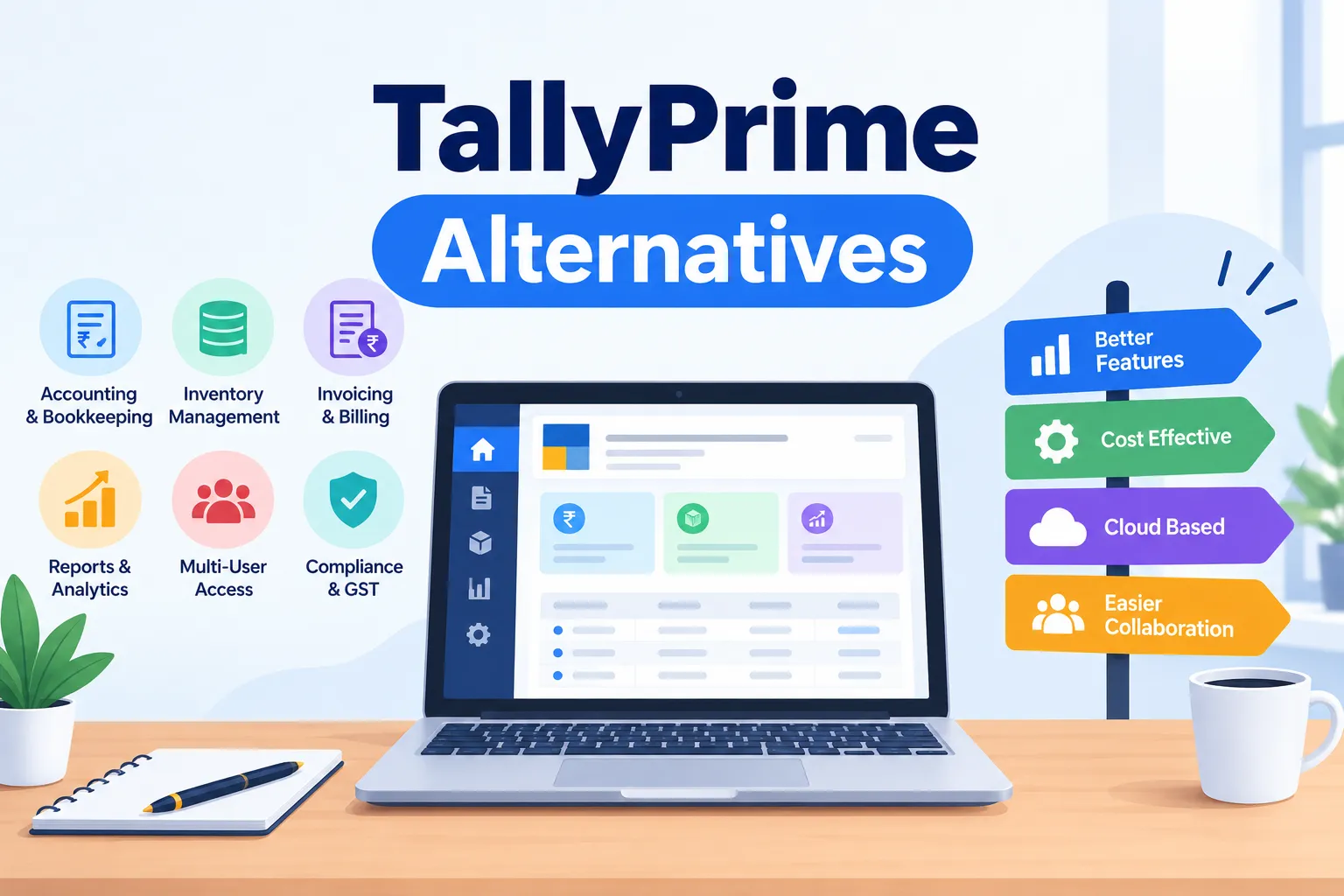
If you're searching for TallyPrime alternatives, you're probably not unhappy with Tally as such. More likely, your business has grown a bit, and the software that handled your books beautifully now feels like it's being asked to do a lot more than keep ledgers. Maybe stock sits in one place, vendor approvals in another, and salaries in a third. That's a very common spot to land in, and it's fixable. This guide walks you through seven options in plain language, so you can shortlist two or three without drowning in vendor tabs.
A quick word on where this comes from. TallyPrime is built to be usable by people without an accounting or IT background, and it lets you run several companies and add things like multiple godowns, multi-currency and cost centres as you need them. That's a real strength, and we'll say so again later. For the list below, we leaned on vendors' own pages and public comparison sites such as SelectHub, SoftwareReviews and SoftwareConnect. Firmity is our own product, so we've been upfront about where it fits and where it doesn't.
Why Businesses Start Looking Beyond TallyPrime
Nobody wakes up one morning and decides to replace their accounting software for fun. It usually starts with a little friction that keeps repeating. Your team starts asking for stock levels across sites, and someone has to compile them by hand. Purchase approvals move over email and WhatsApp, and by month-end nobody can say who signed off on what. Little by little, the books are fine but everything around the books is held together with spreadsheets.
Here are the reasons that come up most often. None of them mean Tally is bad, they just mean your needs have changed:
You want inventory, vendors and purchase approvals handled in the same system as your accounts.
You run more than one site and want one clear view across all of them.
You'd like easier access from anywhere, with different roles seeing different things.
You want attendance, payroll or expenses connected to the rest of the business rather than living in separate files.
How We Picked These 7 TallyPrime Alternatives
We kept the criteria short, because a giant checklist helps nobody. First, each tool had to be something Indian businesses actually consider, based on how often it appears on comparison pages and shortlists. Second, we looked at the practical things that cause real month-end stress: stock, purchasing, approvals, reporting and, where relevant, compliance. Third, we tried to be fair about trade-offs, because every option here is great for somebody and awkward for somebody else.
You'll notice there are no prices in this guide. Plans change often and many vendors quote based on users or modules, so any number we printed could be stale by the time you read it. Instead, treat each "worth checking" note below as a question to ask on a demo call. That one habit will save you far more time than any comparison table.
TallyPrime Alternatives at a Glance
Option | Best for | Strongest area | Worth checking before you buy |
|---|---|---|---|
Firmity | Plants, campuses and estates running operations across sites | Inventory, vendors, expenses and payroll on one platform | Statutory accounting and GST filing needs |
Zoho Books | Small and growing businesses, especially Zoho users | Cloud accounting | How well it covers inventory and operations |
Odoo | Companies that like tailoring their ERP to fit their own workflow | Flexibility across many business apps | Setup effort and which India features come with your edition |
ERPNext | Indian SMEs comfortable with open-source software | A broad ERP at the core | Implementation support and customisation needs |
SAP Business One | Mid-sized, process-heavy companies | Structured ERP for growing businesses | How costs change as you add modules |
QuickBooks Online | Simple cloud bookkeeping | Easy accounting basics | India availability and GST and TDS support |
NetSuite | Larger, fast-scaling companies | Full cloud ERP | Project size and fit for smaller teams |
The 7 Best TallyPrime Alternatives, One by One
1. Firmity
Inventory management software from Firmity is built for teams that are tired of chasing stock counts across spreadsheets, WhatsApp groups and half-updated registers. Stock, spare parts, purchase orders, vendor rate cards, goods receipts and a stock ledger all live in one place, so everyone works from the same numbers. Firmity is a cloud-based platform from UFIRM Technologies, and it goes well beyond stock by bringing assets, maintenance, employees, payroll and expenses into the same system. It’s made for facility-heavy businesses like plants, campuses and residential estates. Purchase, leave and expense approvals follow clear workflows that leave a timestamped trail you can export whenever someone asks. If month-end currently feels like detective work, this is the kind of setup that makes it far calmer.
Best for: Facility-heavy organisations that want operations, procurement, expenses and payroll connected across several sites.
What we like:
Data is entered once and reused, so an employee record or purchase order doesn't get retyped in three places.
Nobody has to ask who approved a purchase order anymore, because the sign-off history stays attached to the order itself.
Every site reports into the same system, giving management one view of the whole portfolio.
Expenses are structured by type, so spend is easy to report on without manual reconciliation.
What to keep in mind: Firmity's public pages describe operations modules rather than GST filing or full statutory accounting. So if you rely on Tally for GST returns and your books, you'll likely keep an accounting tool alongside it. Ask about this directly on your demo, and you'll know exactly where the line sits.
2. Zoho Books
Zoho Books is a cloud accounting tool, and it's a natural stop if your business already uses other Zoho apps. Because it belongs to a wider family of products, linking it with your other Zoho tools is usually straightforward. It's also built with Indian businesses in mind, which is why it keeps showing up on shortlists from people moving off desktop accounting software. If your main goal is accessing your books from anywhere with less manual work, it deserves a place in your comparison.
Best for: Small and growing businesses that want cloud accounting, particularly those already in the Zoho ecosystem.
What we like: Your books are available online from anywhere, and things feel simpler if Zoho apps are already part of your daily work.
What to keep in mind: Ask how far it goes on inventory and operations. If you need deep stock control across several sites, check that part with a demo using your own data. Our guide to Zoho Inventory alternatives covers the inventory side in more detail.
3. Odoo
Odoo works like a toolbox of business apps, so you switch on only the ones your team actually needs.. Public comparison sites regularly place it alongside TallyPrime for exactly this reason: you can start with accounting and add things like inventory or purchasing later. That flexibility is wonderful when your needs are unusual. The flip side is that flexible usually means more setup, and the features you get can depend on which edition you choose.
Best for: Teams that prefer building their system step by step around their own processes.
What we like: The ability to start small and add modules as you grow.
What to keep in mind: Ask which India-specific features, such as GST, are included in the edition you're considering, and how much setup help you'll need.
4. ERPNext
ERPNext is an open-source ERP built by Frappe, a company with Indian roots, and it's popular with small and mid-sized businesses that like having control over their software. It covers a wide range of ERP functions in one product, from accounting to stock and beyond. Open-source also means you can often adapt it to how your team really works. The trade-off is that you'll want someone comfortable with implementation, either in-house or through a partner.
Best for: Indian SMEs comfortable with open-source software and a bit of customisation.
What we like: Broad coverage in one product, and the freedom to adapt it.
What to keep in mind: Ask who will handle setup and ongoing support, and confirm the GST features you need.
Juggling Stock, Vendors and Payroll Across Several Sites?
Let's pause here, because this part is for anyone nodding along. If your accounts are fine but every month-end turns into a hunt through spreadsheets for stock counts, purchase approvals and salary inputs, the issue usually isn't your accounting tool. It's that your operations don't share one source of data. Firmity brings assets, inventory, vendors, expenses and payroll onto a single platform, so each team works from the same records. Tell the team what you're running today, and they'll get back to you within 24 hours.
Talk to the Firmity team and book a demo
5. SAP Business One
SAP Business One is SAP's ERP for small and mid-sized businesses, and it turns up near the top of several roundups of TallyPrime alternatives. It's a structured system for companies whose processes have outgrown simple bookkeeping. That structure is its strength, and it also means a bigger project than switching between two accounting tools. One roundup points out that costs can grow as you add modules, so it pays to map out exactly what you need before you ask for a quote.
Best for: Mid-sized, process-heavy companies that want a full ERP.
What we like: A broad, structured ERP that suits growing operations.
What to keep in mind: Ask for a complete cost picture across all the modules you'll actually use, plus the implementation timeline.
6. QuickBooks Online
QuickBooks Online is a well-known cloud accounting tool, and comparison sites frequently list it next to TallyPrime. It's a good example of the "simple cloud bookkeeping" category. The important thing for an Indian business is to check the fit carefully: confirm whether it's currently offered to customers in India and how it handles GST and TDS before you spend time on a trial. We'd rather flag that honestly than assume it works the way you need.
Best for: Straightforward cloud bookkeeping, once you've confirmed it supports your Indian compliance needs.
What we like: An approachable accounting experience with cloud access.
What to keep in mind: India availability and support for GST and TDS should be the first questions you ask.
7. NetSuite
NetSuite is a cloud ERP from Oracle, and it sits at the bigger end of this list. It tends to be considered by larger or fast-scaling companies that want finance, inventory and operations in one system. That makes it powerful, but it's usually a bigger undertaking than the other options here. If you're a smaller team, you may find it's more system than you need right now, which is perfectly fine to admit.
Best for: Larger or fast-growing companies that want a full cloud ERP.
What we like: Wide coverage across finance and operations in a single cloud system.
What to keep in mind: Ask about project scope, timeline and whether it's the right size for your team today.
How to Choose the Right TallyPrime Alternative for Your Business
Start by writing down the three things that frustrate you most today, because those are the problems your next tool has to fix. Then think about compliance. GST returns are filed through the official GST portal, so ask every vendor exactly how their product works with it rather than assuming. Next, decide whether you're replacing your accounting or adding to it, since those lead to very different shortlists.
If stock is your biggest pain point, it's worth reading our roundup of top inventory software in India before you book demos. And whatever you do, never choose from screenshots alone. Ask each vendor to run your own sample data through a demo, including a real purchase order, a stock transfer and a month-end report.
Switching Away From Tally Without Breaking Your Books
Switching feels risky mostly because accounts are the one place nobody wants surprises. Even a bit of preparation now can save you plenty of stress later.. Pick a moment right after a period close rather than the middle of a month. Export your ledgers, masters and stock data before you do anything else, and keep a safe copy. If you can, run both systems side by side for one cycle and compare the results line by line before you retire the old one.
FAQs About TallyPrime Alternatives
Usually yes. Most teams export their masters, ledgers and stock data and then import them into the new system. Ask each vendor how they handle imports before you commit, since support varies.
It depends on what you need. For cloud accounting, Zoho Books is a common starting point. For operations like stock, vendors and payroll across sites, Firmity is worth a look.
Yes, several. Zoho Books, QuickBooks Online and NetSuite are all cloud-based, and Firmity is a cloud platform too. Check India availability and GST support for each one.
Not for everyone. Its public pages focus on operations like inventory, vendors, expenses and payroll rather than GST filing, so many teams would use it alongside an accounting tool. Confirm your exact needs with the team.
Author Bio

Syed Aadam
Syed Aadam is a software engineer with a Bachelor's and Master's in Information Technology with a specialization in Artificial Intelligence and Machine Learning. Having trained, and assisted in training foundational ML models for solving frontier scientific problems at the intersection of biodiversity and technology, Syed Aadam has been working to develop AI-enabled CMMS, ERP and CAFM softwares at Ufirm Technologies.
Talk to our team
Questions about facility management software? Leave your details and we'll get back to you within 24 hours.
More on Inventory Management
What Is Inventory Management? Process, Types & Methods
What is inventory management? Learn how it works, the main types, techniques like ABC and FIFO, and common mistakes, with a simple reorder example.
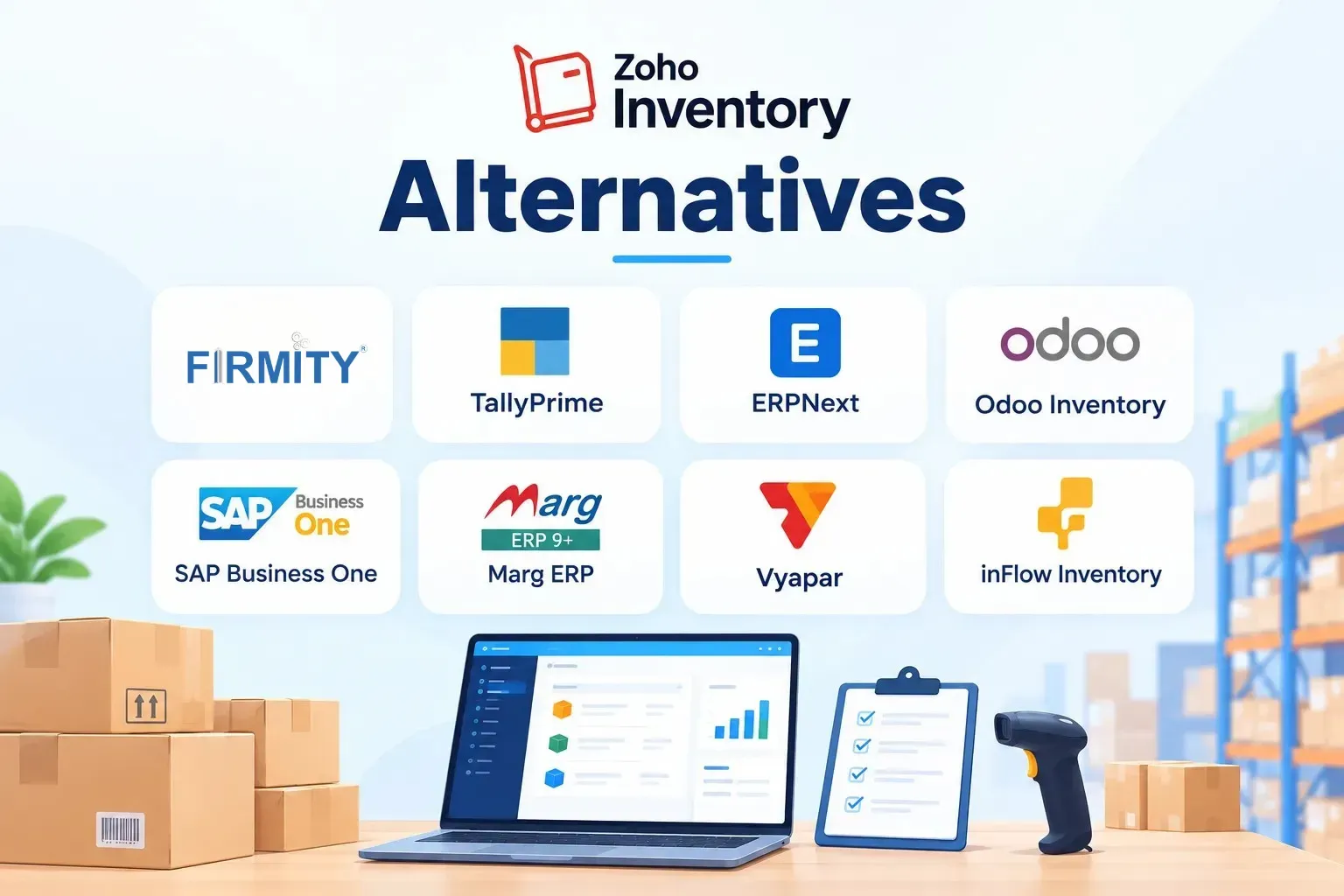
Zoho Inventory Alternatives: Best Inventory Management Software to Consider
Compare the best Zoho Inventory Alternatives, including Firmity, TallyPrime, ERPNext, Odoo, SAP Business One, and more to find the right inventory software.
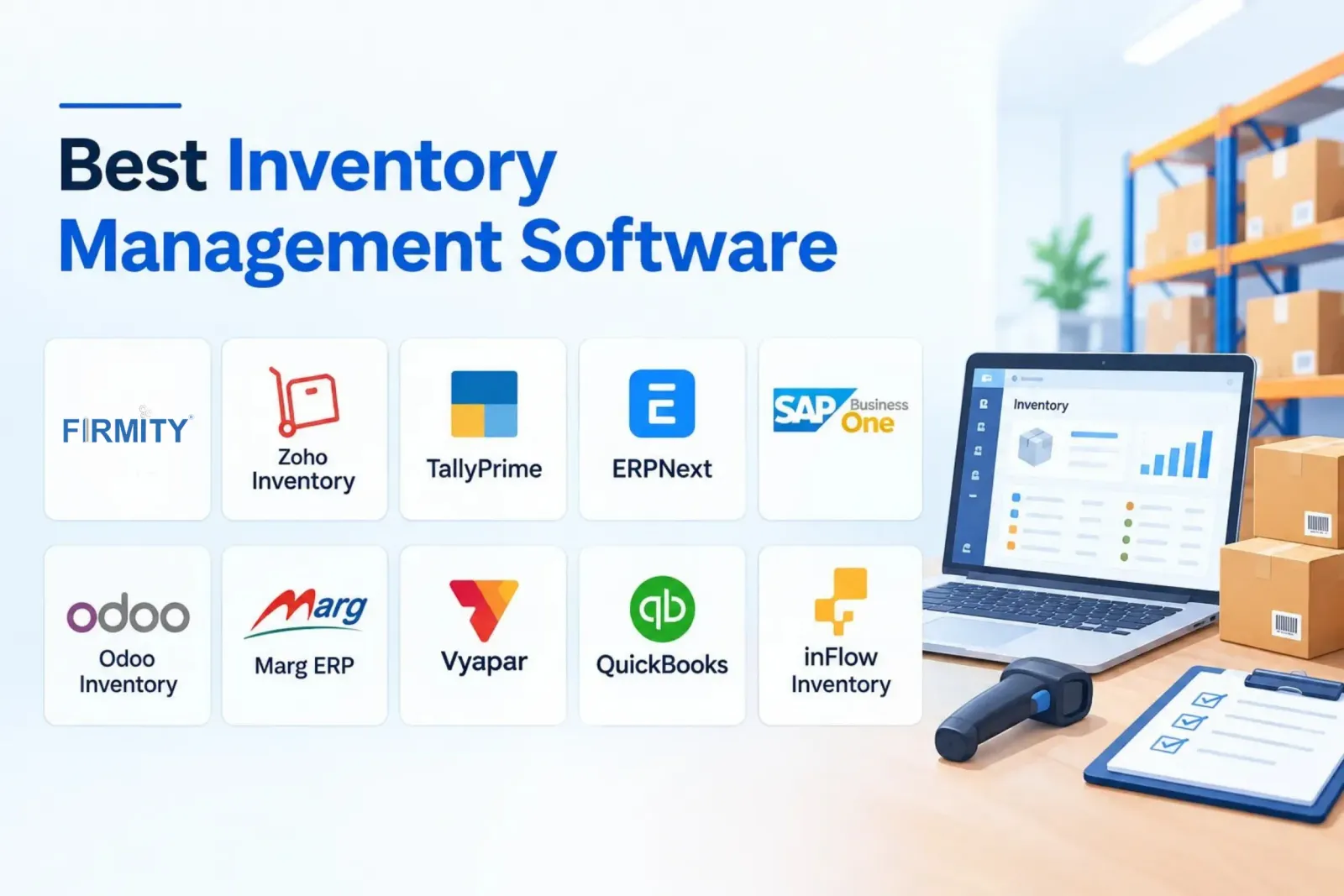
Best Inventory Management Software in India
Inventory Management Software in India helps businesses track stock, purchases, transfers, spare parts, and multiple locations. Compare the best inventory software and features to choose the right solution for your business.