Inventory Management
7 Best ERPNext Alternatives for Inventory in 2026 (Affordable Options for Indian Businesses)
· 10 min read
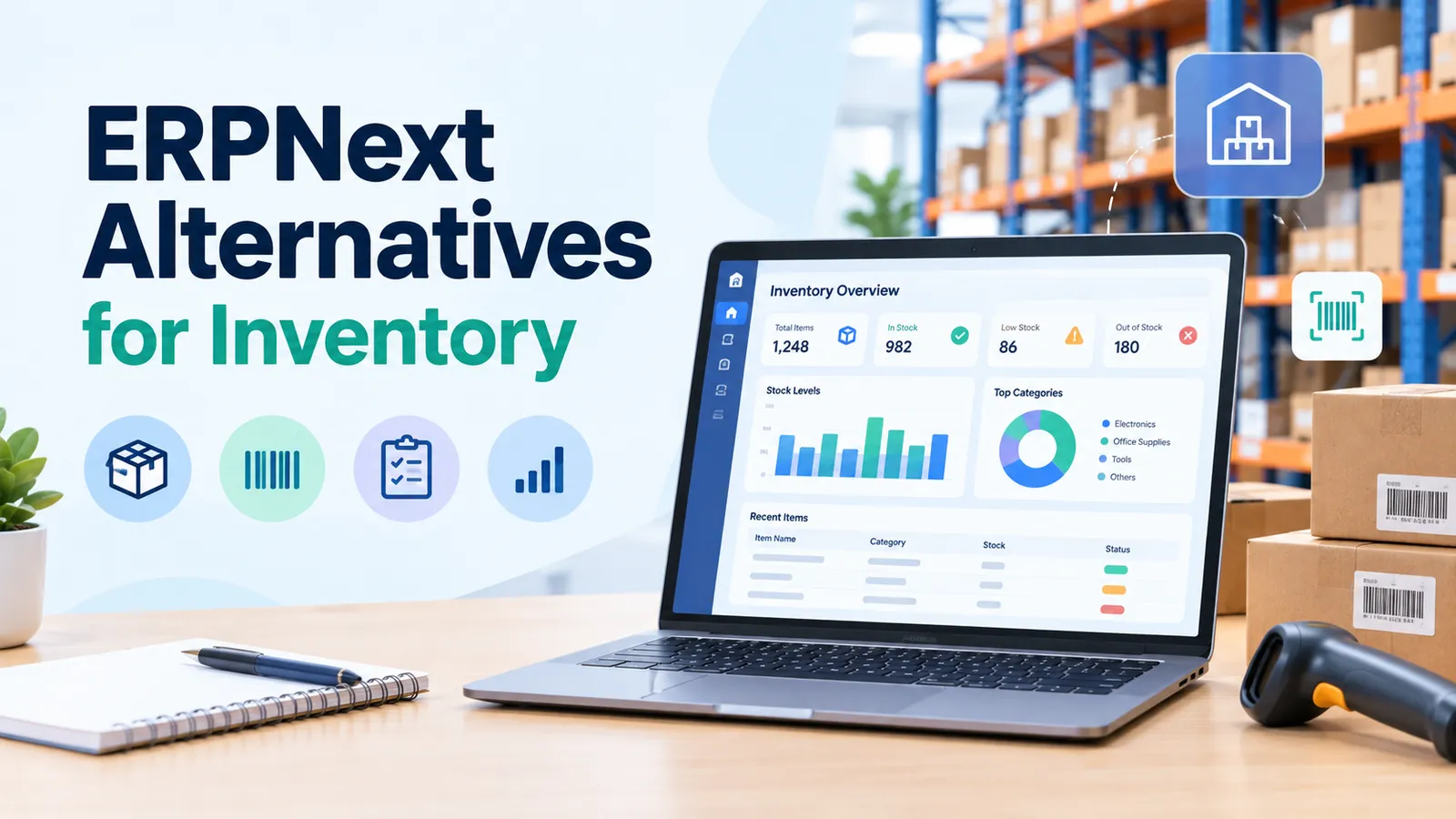
If you're looking at ERPNext alternatives for inventory, there's a good chance your needs are simpler than a full ERP. You want to know what's in stock, what's on order and what a vendor charged last time, without paying for or learning a dozen modules you'll never touch. That's a perfectly reasonable thing to want, and it's how a lot of small and mid-sized teams end up shopping around. This guide walks through seven options in plain language, with an eye on keeping your costs sensible.
A quick word on where this comes from. ERPNext is a free, open-source ERP developed by Frappe Technologies, and its feature list covers inventory, warehouse and purchase order management. It's a solid product, and we'll say so. For this list, we looked at vendors' own descriptions and public comparison sites like Capterra and AlternativeTo, then picked the options that make sense for stock-focused teams. Firmity is our own product, so we've been honest about where it fits and where it doesn't.
Why Teams Look at an ERPNext Competitor for Inventory
Nobody switches stock tools for fun. It usually starts with a small mismatch that keeps repeating. You asked for a simple view of stock levels, and instead you're configuring a big system with modules for things you don't do. Or your team spends more time learning the software than counting stock. When that happens, a tool built around inventory can feel like a relief.
Here are the reasons that come up most often, and none of them mean ERPNext is a bad choice:
A full ERP can be more than a stock-focused team actually needs.
Setup and customisation take time, and not every team has someone to spare for it.
You'd like stock, purchase orders and vendor tracking in one simple place.
You want a clear picture of what the whole thing will cost before you commit.
How We Picked These ERPNext Alternatives (Budget First)
We kept the criteria short on purpose. First, each tool had to handle the basics of inventory properly: tracking stock, managing purchases and keeping a record of what moved. Second, we looked at how much effort it takes to get going, because setup time is a cost too. Third, we paid attention to how each option is priced, from open-source tools you can host yourself to subscription tools you pay for monthly.
You won't see any prices in this guide, and that's on purpose. Plans change often and many vendors quote based on your setup, so any number we printed could be stale by the time you read it. Treat the "worth checking" notes below as questions to ask on a demo or trial. That one habit will save you more money than any comparison table.
ERPNext Alternatives for Inventory at a Glance
Option | Best for | Cost approach | Worth checking before you buy |
|---|---|---|---|
Firmity | Plants, campuses and estates tracking stock across sites | Ask for a quote | What the quote includes as you add sites or users |
Zoho Inventory | Teams that want a dedicated cloud inventory tool | Subscription, check current plans | How its plan limits match your order volume |
Odoo | Teams that want an open-source starting point they can grow | Open-source edition plus paid editions | Which features come with the edition you choose |
Dolibarr | Small teams comfortable with open-source tools | Open-source | Setup effort and support options |
inFlow Inventory | Small businesses managing stock, sales and orders | Subscription, check current plans | India support and how it handles your tax setup |
Katana Cloud Inventory | Small manufacturers and makers | Subscription, check current plans | Whether it suits your production process |
Craftplan | Small-scale makers who like open-source | Open-source | It's a niche tool, so confirm it fits your process |
The 7 Best ERPNext Alternatives for Inventory, One by One
1. Firmity
Inventory software is where Firmity really earns its spot on this list, especially if your stock details are scattered across sheets, chat groups and old registers. Everything from spare parts and purchase orders to vendor rate cards, goods receipts and the stock ledger sits together, so your whole team reads from one set of figures. Firmity is a cloud platform by UFIRM Technologies, designed around plants, campuses and residential estates that handle stock across more than one site. . Purchase approvals leave a timestamped trail you can export, which keeps audits and month-end checks calm. If you want a focused tool without the weight of a full ERP, it's a sensible one to try.
Best for: Facility-heavy organisations that need stock, spare parts and vendor purchasing tracked across several sites.
What we like:
Spare parts and stock sit in the same system, so nobody has to check two lists before reordering.
Vendor rate cards keep pricing consistent, which makes it easier to spot when a supplier charges more than agreed.
Goods receipts and the stock ledger give you a clear record of what came in and what went out.
Every site reports into the same place, so you get one view instead of one spreadsheet per location.
What to keep in mind: For budget planning, ask what the quote includes and how it changes as you add sites or users. Since Firmity is built around facility operations, it's a better match for plants, campuses and estates than for, say, an online store with thousands of product listings. A quick demo with your own stock data will tell you if it fits.
2. Zoho Inventory
Zoho Inventory is a dedicated cloud tool for stock, and it often turns up when people compare ERPNext with simpler, inventory-first products. Capterra lists it as covering inventory, order and purchase order management, warehouse management and workflow management. That makes it a good fit if your needs revolve around stock and orders rather than a full ERP. It's also a natural choice if your team already uses other Zoho apps.
Best for: Teams that want a focused cloud inventory tool with orders and purchasing built in.
What we like: A clear focus on stock, orders and purchasing, delivered as a cloud service.
What to keep in mind: Check how the plan limits line up with your order volume and number of users, since costs often move with those. Our guide to Zoho Inventory alternatives goes deeper if you want to compare it further.
3. Odoo
Odoo is a modular system, and AlternativeTo names it as the top alternative to ERPNext. It's also open source, which is a big part of why it appeals to budget-conscious teams. You can start with the stock-related apps and add others later if your needs grow. The trade-off is that a flexible system takes some setup, so it helps to be clear about what you need before you begin.
Best for: Teams that want an open-source starting point they can grow into.
What we like: You can begin small and add features as the business changes.
What to keep in mind: Odoo has both an open-source edition and paid editions, so confirm exactly which inventory features come with the one you plan to use.
4. Dolibarr
Dolibarr is an open-source ERP and CRM that regularly appears next to ERPNext on comparison lists. It's aimed at small and medium-sized teams, which makes it worth a look if you want something lighter than a big enterprise system. Being open source means you aren't paying a licence fee to try it. What you do pay with is time, since you'll want someone comfortable with setup and upkeep.
Best for: Small teams that are comfortable with open-source tools.
What we like: A lighter, open-source option that doesn't require a licence fee to try.
What to keep in mind: Ask who will handle installation, updates and support, because those hours count as part of your real cost.
Tired of Chasing Stock Counts Across Sites?
Quick break, because if this sounds familiar, the next bit is meant for you.. If your team spends the end of every month matching physical counts to spreadsheets, hunting for purchase approvals and double-checking what a vendor charged, the problem usually isn't your people. It's that your stock data lives in too many places. With Firmity, stock, spare parts, purchase orders, vendor rate cards and goods receipts share one cloud platform, which means every site looks at the same records. Share what you’re tracking right now, and the team will reply within 24 hours.
Talk to the Firmity team and book a demo
5. In-Flow Inventory
inFlow Inventory is built for small businesses that want to manage stock and sales together. Public descriptions mention tracking stock, creating labels and fulfilling orders, plus support for assembly and shipping with inventory costs kept up to date. That combination suits a team that sells products and wants tidy stock records behind those sales. It's a straightforward, inventory-first tool rather than a sprawling ERP.
Best for: Small businesses that manage stock and orders together.
What we like: Inventory-first, with order fulfilment, labels and assembly support described on its listings.
What to keep in mind: Before you trial it, check India support and how it handles your tax setup, since not every international tool is built around Indian requirements.
6. Katana Cloud Inventory
Katana is a cloud inventory tool, and public listings describe a centralised view of stock, order management and automation with integrations. It positions itself around small manufacturers and makers, which is a useful signal about who it suits. If you buy raw materials, make products and sell them, that focus can save you from forcing a general tool to behave like a production system. It's less obvious as a pick for a team that simply stores and issues spare parts.
Best for: Small manufacturers and makers who want stock tied to production.
What we like: A centralised view of stock with order management and automation.
What to keep in mind: Make sure it matches how you actually produce and sell, and ask about plan limits as your volume grows.
7. Craftplan
Craftplan is the niche pick on this list, and we're including it for budget-conscious teams that like open source. It's an open-source platform that covers inventory, production batching, order processing, purchasing and scheduling, with cost tracking, supplier management, CSV imports and role-based access. It's described as aimed at small-scale artisans, so it won't suit everyone. For a very small team that makes things and wants low software costs, it's worth a look.
Best for: Small-scale makers who want an open-source tool.
What we like: Inventory, purchasing and production planning in one open-source package, with cost and supplier tracking.
What to keep in mind: It's a niche tool, so confirm it matches your process and that you're comfortable with the setup and support involved.
How to Choose the Right ERPNext Alternative for Inventory
Start by listing the three things that frustrate you most about stock today, because those are the jobs your next tool has to do. Then count what you actually manage: how many items, how many sites, and how many people raise purchase orders. A tool that's perfect at 200 items can feel cramped at 20,000, and the reverse is also true. Be honest about size, and you'll avoid paying for more than you need.
If you want a wider view before booking demos, our roundup of top inventory software in India is a handy companion read. And whatever you shortlist, never pick from screenshots alone. Ask each vendor to run a real purchase order, a stock transfer and a month-end report using your own sample data.
Switching From ERPNext Without Losing Stock Data
Switching feels risky mostly because stock numbers are the one thing you can't afford to lose. A little preparation helps a lot. Export your item list, stock balances and vendor details before you do anything else, and keep a safe copy. Pick a quiet time for the move, ideally right after a physical count. If you can, run both systems side by side for one cycle, and compare the stock balances line by line before you retire the old one.
Final Thoughts
Finding the right ERPNext alternative for inventory doesn't need to turn into a long project. Work out what's actually slowing you down, shortlist two or three tools that match your size and budget, and test each one with your own data. If your world is plants, campuses or estates, where stock, spare parts and vendor purchases all need to line up, it's worth a conversation with the Firmity team to see whether a focused tool can simplify things for you.
FAQs About ERPNext Alternatives
There are open-source options, including Odoo's community edition, Dolibarr and Craftplan. They save on licence fees, but remember to count setup, hosting and support time as part of the real cost.
It depends on what you do. A focused cloud tool like Zoho Inventory or inFlow suits product-and-order businesses, while Firmity is worth a look if you track stock and spare parts across plants, campuses or estates.
Usually you can export item lists and stock balances and then import them into the new tool. Ask each vendor how they handle imports before you commit, since support varies.
Run a small trial with your own data, ask what the quote includes as you add users or sites, and compare open-source and subscription options on both money and time.
Author Bio

Syed Aadam
Syed Aadam is a software engineer with a Bachelor's and Master's in Information Technology with a specialization in Artificial Intelligence and Machine Learning. Having trained, and assisted in training foundational ML models for solving frontier scientific problems at the intersection of biodiversity and technology, Syed Aadam has been working to develop AI-enabled CMMS, ERP and CAFM softwares at Ufirm Technologies.
Talk to our team
Questions about facility management software? Leave your details and we'll get back to you within 24 hours.
More on Inventory Management
7 Best TallyPrime Alternatives in 2026 (Compared for Indian Businesses)
Looking for TallyPrime alternatives? Compare 7 accounting and ERP options for Indian businesses, with clear notes on who each one suits best.
What Is Inventory Management? Process, Types & Methods
What is inventory management? Learn how it works, the main types, techniques like ABC and FIFO, and common mistakes, with a simple reorder example.
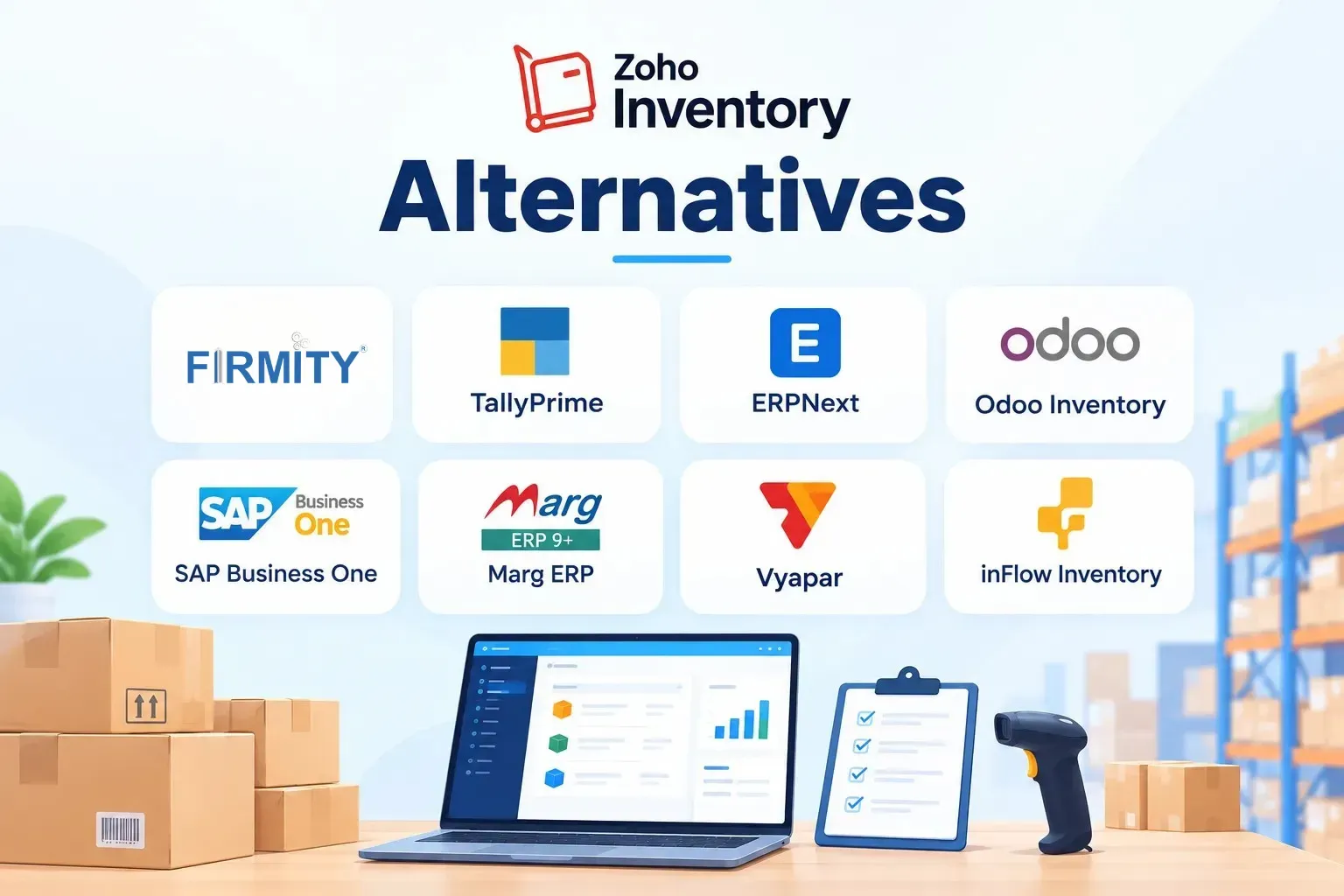
Zoho Inventory Alternatives: Best Inventory Management Software to Consider
Compare the best Zoho Inventory Alternatives, including Firmity, TallyPrime, ERPNext, Odoo, SAP Business One, and more to find the right inventory software.